Spring minestrone
Spring minestrone
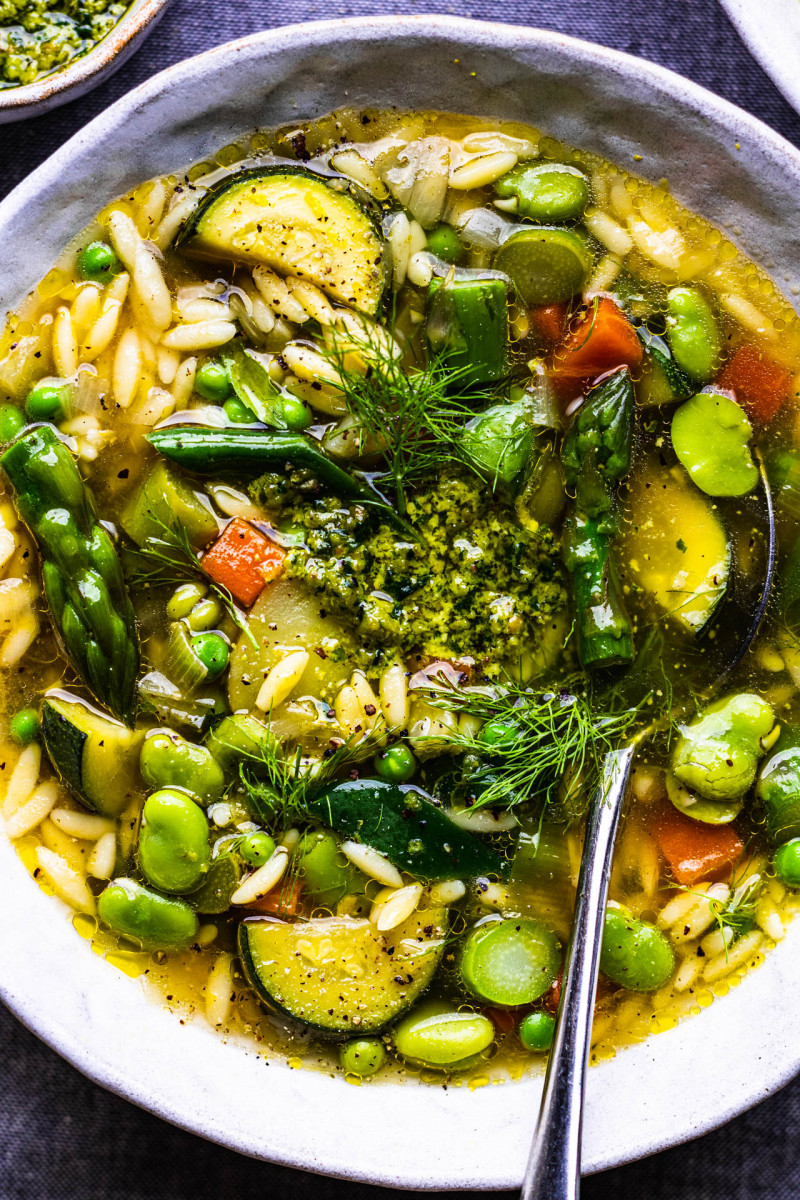
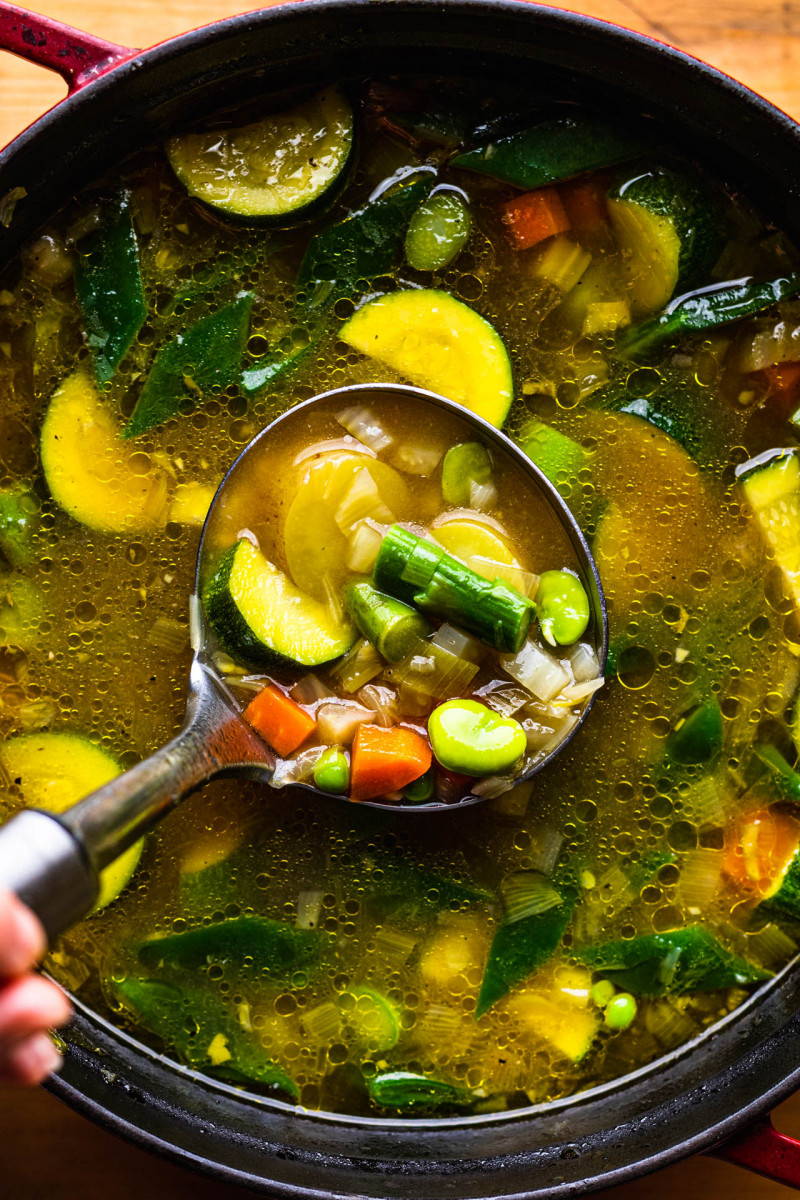
Despite it being May, it’s been very windy and cold over here lately, which is the perfect kind of weather for a bowl of warming spring minestrone. It’s been a while since I made a soup for the blog and the unseasonably cold weather has inspired to correct that straight away 🙂 .
The beauty of minestrone is that it is such a seasonal and pantry clearing dish that makes it infinitely adaptable – there is no single recipe for a minestrone. Minestrone is a chunky and nourishing soup that originated in Italian peasant cooking and so it relies on seasonal leftovers and pantry staples. It’s easy to throw together yet it’s deeply flavourful and satiating. As opposed to most vegetable soups, it tends to have a starchy component, like small pasta, rice or potatoes which make the soup immediately more substantial and release thickening starchy into the stock.
My aim behind this spring minestrone recipe was to make it as green as possible and throw as many different types of plant foods as possible – we now know that diversity of plants we eat is super important for the health of our microbiome. My version has onion, garlic and leek as aromatics, carrot and fennel as a base plus season asparagus, green beans, baby zucchini (courgettes), green peas (I used cuter petite pois actually as I always have a bag of them in my freezer – they are a firm favourite of my local ducks, swans and geese too 🙂 ), broad beans and new potatoes – pretty much everyone is at my spring minestrone party!! If any of these are not available to you or you dislike them, don’t sweat it simply swap them out for another veg you do like.
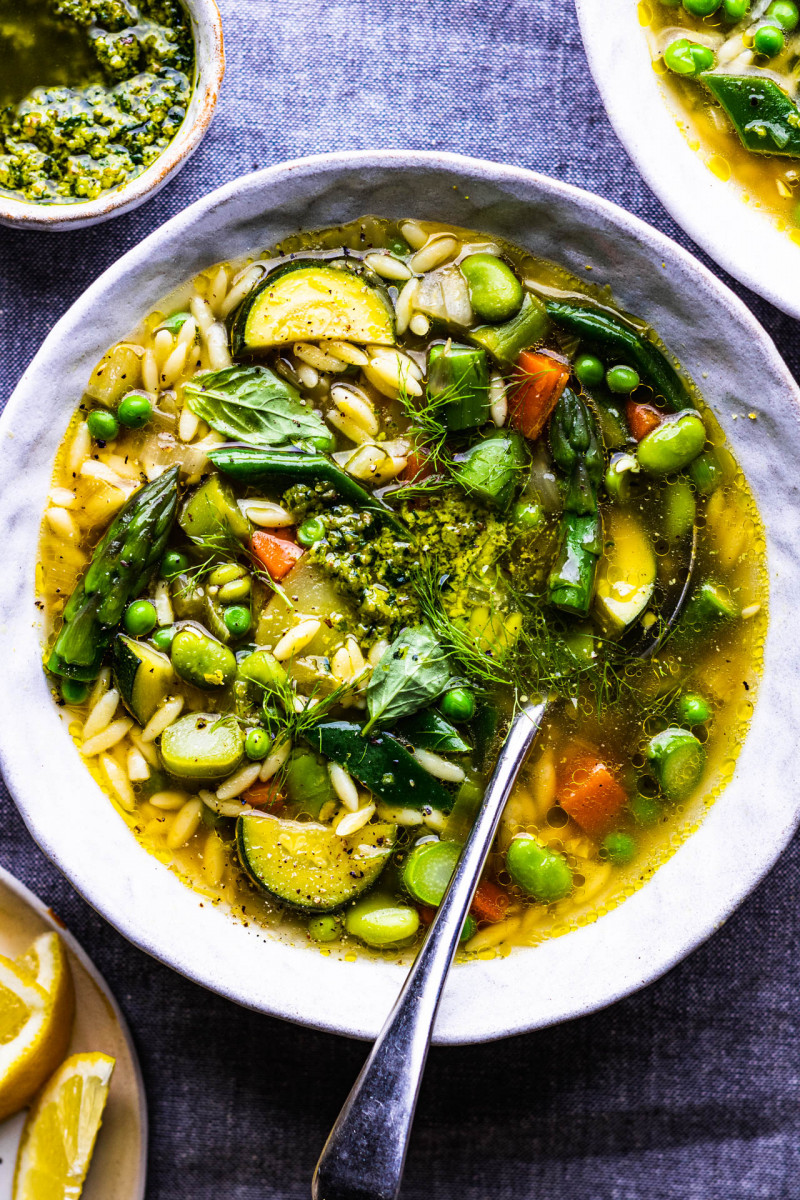
While traditional minestrone recipes often use parmesan rind for an extra boost of flavour, my spring minestrone is vegan so instead of cheese, I added a touch of miso at the end to enhance the soup’s flavour. I further enriched its flavour and added viscosity by serving it with a dollop of quick homemade pesto. I often keep homemade pesto in my freezer for this kind of thing but if you don’t have any to hand, simple drizzle the soup with a touch of quality olive oil once served.
MORE ABOUT THE INGREDIENTS
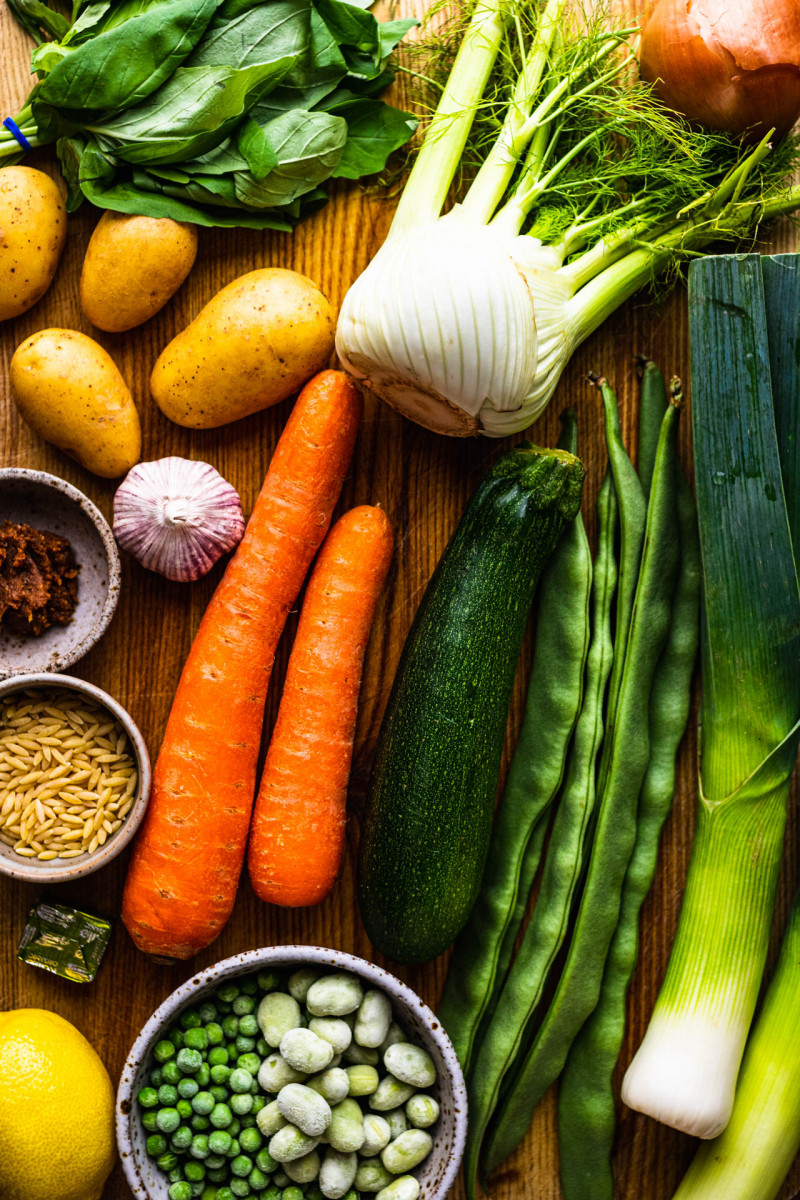
ASPARAGUS: British-grown asparagus is starting to make an appearance over here and since its season is so short, it would be rude not to include it in this spring minestrone. I chop it up into bite-size pieces and boil it in the soup for only about 2-3 minutes or so. I want it to retain a bit of texture and not to lose its vibrant green colour.
GREEN PEAS: Green peas are such an easy and protein-rich addition to this spring minestrone. I always have a bag of frozen green peas or petite pois in my freezer so that’s what I used, but if you can get fresh green peas where you live this is the dish to use them in.
BROAD BEANS: Broad beans may not be in season just yet over here (the season starts in June), but I grabbed a bag of frozen broad beans while at the supermarket. They are cheap, nutritious and green so a perfect fit for my spring minestrone recipe.
GREEN BEANS: I love green beans of any type and their firm texture so I decided to add some to this soup too. I bought mine fresh, chopped them into small, bite-size pieces and cooked them directly in the soup for 3 minutes.
ONION, LEEK & GARLIC: These three vegetables do not need an introduction as they form the base of most soups. While typically you would use either an onion or a leek, I went for both in this instance.
CARROTS: A couple of chopped carrots add a little bit of natural sweetness and a burst of contrasting colour to this predominantly green minestrone soup.
FENNEL: Fennel, alongside carrots, and aromatics creates the base of this spring minestrone, known as soffritto in Italian cuisine. While green celery is often used, fennel is an excellent alternative to celery in soups. Fennel introduces subtle aniseed notes to this soup which pairs beautifully with the earthy miso that I add to this soup for extra flavour.
NEW POTATOES: This is the season for new potatoes and there are few things as comforting as chunks of potato in your bowl of soup, in my opinion. Using potatoes in your spring minestrone is an especially good move if you want to make this soup gluten-free but not miss out on its ability to satiate you.
SMALL PASTA: This spring minestrone already contains potatoes so pasta is optional, but I do like to include it. You want small, soup-friendly pasta shapes that won’t keep on jumping off your spoon like orzo, ditalini, small shells, elbows or, my childhood favourite, stelline (tiny stars). If you are making enough soup to have leftovers, I recommend cooking your pasta separately and adding it directly to the soup bowls as otherwise the pasta that is left over in the soup will absorb all of the moisture and turn the soup into a stew.
VEGGIE STOCK: Liquid veggie stock or a good quality veggie stock cube or two are an essential ingredient in making this spring minestrone. Since we are using a bit of miso paste you could get away with just water at a push, but quality veggie stock will certainly make this soup taste much nicer.
MISO: While miso is not a traditional minestrone ingredient, I decided to add some to my spring minestrone to enhance its depth of flavour. Traditional minestrone often uses parmesan rind for that reason, as this version of spring minestrone is vegan, I opted for some miso paste instead. If you have no miso, don’t worry. You can either replace it with some nutritional yeast (and extra salt) or skip altogether.
LEMON: I like to add a squeeze of lemon juice to lift the flavour of this spring minestrone and to add much needed freshness. I also like to top each portion with a bit of zest for bright citrusy notes.
PESTO: I used homemade basil pesto to add extra flavour and richness to this spring minestrone. You can add it directly to the pot at the end, but I prefer topping the bowls of soup with it instead. It looks, smells and tastes divine.
HOW TO MAKE IT?
1) COOK THE SOFFRITTO
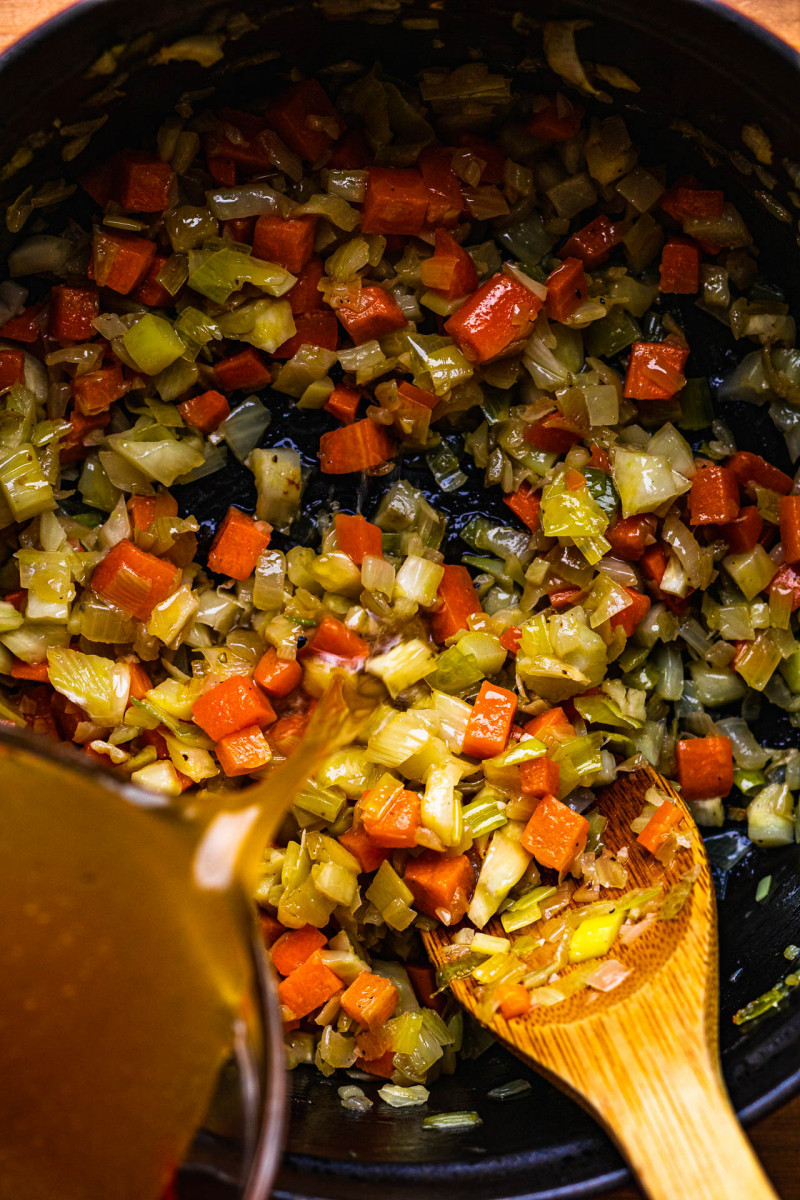
Every good soup starts off with a delicious base of vegetables, which Italians refer to as soffritto. I used an onion and leek, garlic (lots of it), a carrot and a fennel (you can use celery if you prefer). I chopped them up fairly small (about 0.5 cm / 0.2 ” dice roughly apart from garlic which I diced finely) and fried them in plenty of olive oil. I gave my onion and leek a head start as they always need a bit longer, then added more fragile garlic together with carrot and fennel. When all these vegetables look glossy and cooked, I add the liquids, in this case dissolved stock cube and water, and bring them to a simmer.
2) COOK VEGETABLES
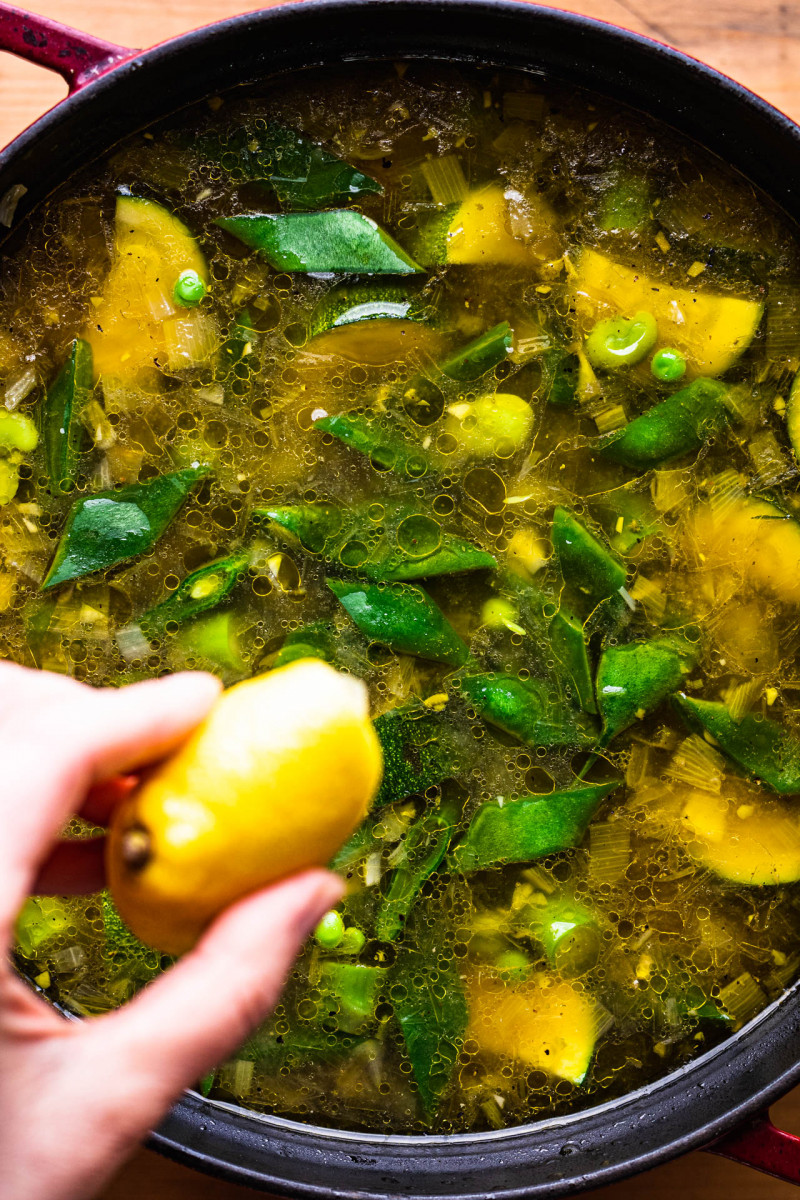
Once the broth is simmering away, it’s time to cook all of the vegetables and pasta in the right order. We start off with ingredients that take the longest to cook and gradually add those that need the least amount of time. I like my pasta cooked right so I tend to cook it separately but you can totally cook it in the soup unless you are making more soup than you’ll be able to eat. If you are planning on leftovers, I recommend that you cook your pasta separately and add it directly to the serving bowls, otherwise leftover pasta soaks up all of the broth and turns into unpleasant mush. Once all your vegetables are cooked, season the soup with lemon juice.
3) SEASON
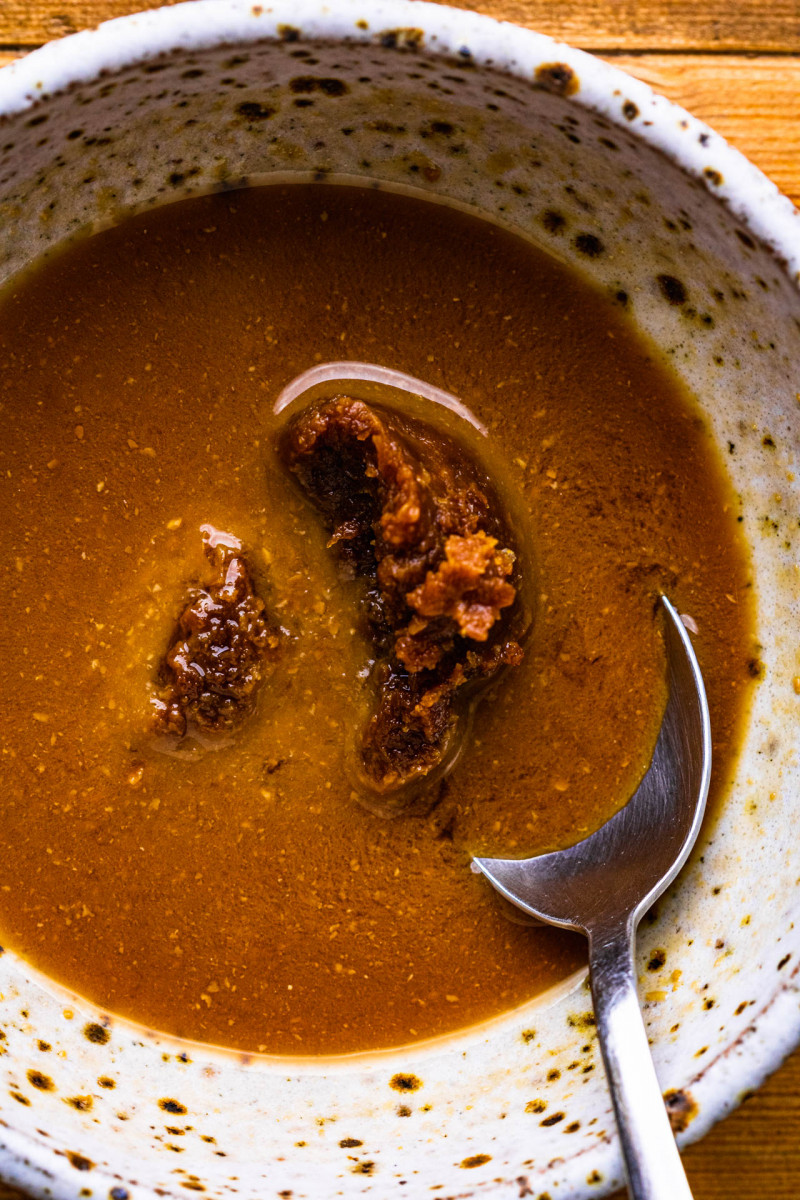
A traditional thing to do is to add a rind of parmesan to the broth to enhance its flavour. Since this version of spring minestrone does not use diary, I decided to use another different flavour enhancer – white miso paste. You want to dissolve it in some water and add to the soup at the end of cooking as cooking miso will destroy its health properties. Once you’ve added the miso, taste and season with salt and pepper to taste.
4) SERVE
Finally, divide between bowls, top with pesto and a smattering of lemon zest and enjoy!
SPRING MINESTRONE
- 3-4 tbsp / 45-60 ml olive oil
- 5 garlic cloves, finely sliced
- 1 small onion, finely diced
- 1 leek, finely sliced
- 1 large carrot, diced
- 1 small fennel bulb, diced
- 1 veggie stock cube
- 400 g / 14 oz new potatoes
- 1 courgette
- 200 g / 7 oz green asparagus (or more green beans)
- 100 g / 3.5 oz green beans (or more asparagus)
- 120 g / 1 cup frozen broad beans (or more green peas)
- 130 g / 1 cup frozen petite pois or green peas
- 200 g / 7 oz orzo or other small pasta (or add canned beans)
- 30 g / 2 tbsp white miso paste
- salt & pepper, to taste
- lemon juice, to taste + zest for serving
QUICK PESTO (or use shop-bought!!)
- 1 small garlic clove, sliced
- pinch of coarse salt
- 30 g / 1 oz Italian basil
- 25 g / 0.85 oz (a handful) roasted pistachios or other nuts
- 2 tbsp nutritional yeast
- extra virgin olive oil, approx 4 tbsp / 60 ml
- squeeze of lemon
- grind of black pepper
- Heat up olive oil in a heavy bottom pot. Add onion and leeks. Fry them gently, stirring regularly, until the onion looks translucent and the leek turns bright green.
- Add garlic, carrot, fennel and a good pinch of salt and fry for another 5-10 minutes stirring frequently.
- Meanwhile, dissolve the stock cube in 250 ml / 1 cup of water.
- Prepare remaining vegetables by slicing zucchini / courgette in half then into 1 cm / 0.4″ slices. Slice potatoes into same size coins and cut asparagus and green beans into 1.25 / 0.5″ segments.
- If using frozen green beans I recommend simmering them separately in a pot of simmering water for 6 minutes, shocking them in cold water and taking the skins off with your fingers before adding to the soup at the very end.
- Add dissolved stock cube and an extra 2 lt / 8 cups of water to the pot with the soup base, then add pasta (if you are planning on leftovers cook pasta separately – see notes) and potato slices (they both need about 11 mins), after 6 minutes add zucchini half moons (they need about 5 minutes), after further 2 minutes add asparagus, green beans and petite pois (they all need about 3 minutes).
- While the veggies are cooking, mix miso paste with a splash of water in a small bowl. Add this diluted miso paste to the soup at the end. Taste the soup and add more salt and pepper to taste. Finally season with lemon juice (about 1-2 tbsp to taste).
- Distribute between bowls, serve with a dollop of pesto and sprinkling of lemon zest if liked.
QUICK PESTO
- Place garlic and a good pinch of coarse salt in a pestle & mortar. Pound the garlic until it turns into a homogenous paste.
- Add basil leaves in batches, mince each portion of the basil leaves by making circular motions with your pestle.
- Once your basil leaves are well minced, add toasted nuts and crush them into small pieces.
- Finally add nutritional yeast and a squeeze of lemon, then pour in the olive oil while stirring the pesto with your pestle to emulsify. Add just enough oil for the pesto to have a nice thick consistency. Season with salt and pepper to taste.
Minestrone soup is by its nature very VERY ADAPTABLE so if you don’t have some of these ingredients, do not sweat it, substitute! No asparagus in season, use more green beans. No broad beans, use more peas. No potatoes, use more pasta and canned beans for bulk and nutrition.