Thai red curry noodle soup
Thai red curry noodle soup
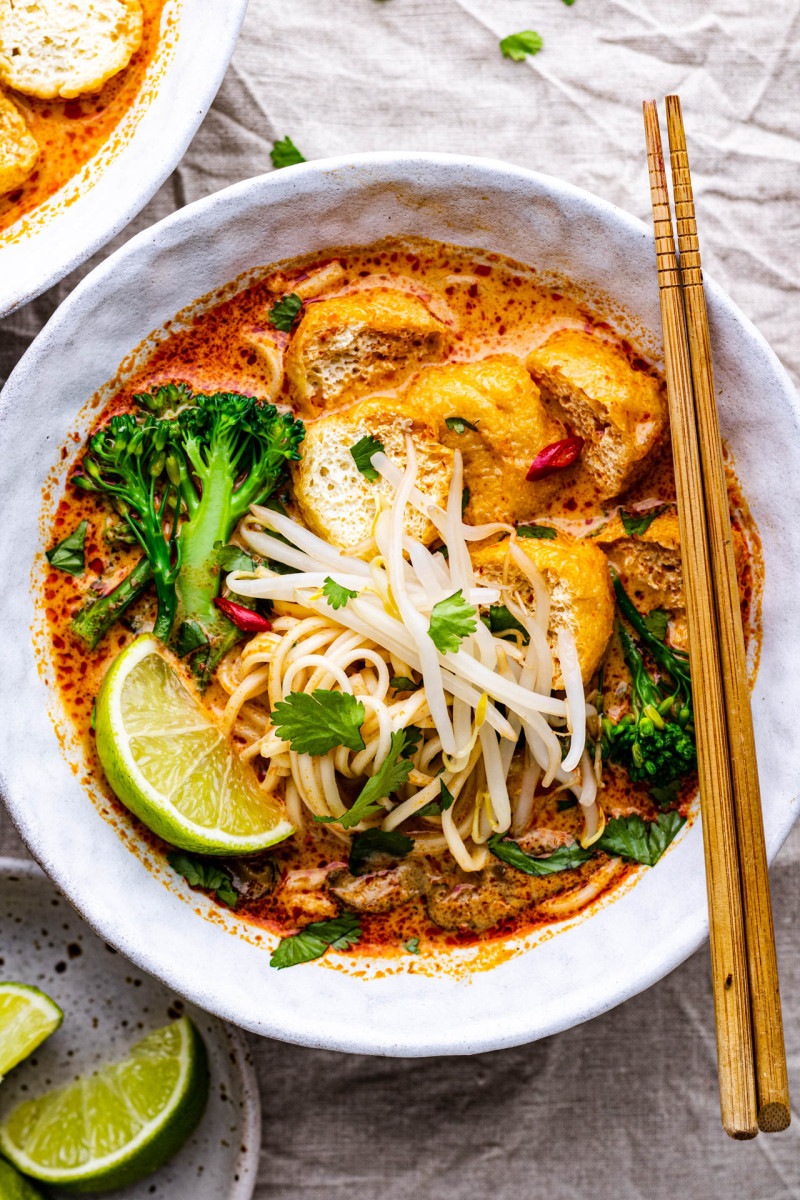
While the sunshine has been simply glorious over the past week, the forecast warns of colder days ahead. With that in mind, my today’s recipe is for a simple Thai red curry noodle soup or Thai-inspired red curry noodle soup, I should say.
The inspiration behind this simple Thai red curry noodle soup was that I craving something warm and comforting yet still fairly light. I also wanted the dish to be easy and quick to make so instead of making my own curry paste, I bought one. Making a curry paste would involve making a special trip to an Asian supermarket to get hard to get ingredients and then processing them into a paste, I cheated and bought a commercial red curry paste instead. I did, however, add a bit of ginger and a stalk of lemongrass as those fresh citrusy flavours are often the ones that get muted in shop-bought curry pastes.
I was also going to buy my stock but I could only find chicken or beef stock and since I had a few off cuts in my fridge, I decided to make the stock for this soup but that’s totally optional. I had leftover carrots, coriander stalks, a wedge of white cabbage and some celery sticks I really wanted to get rid of so I made them into a stock. If you want me to share my stock recipe for this soup, let me know and I will do that in a separate post.
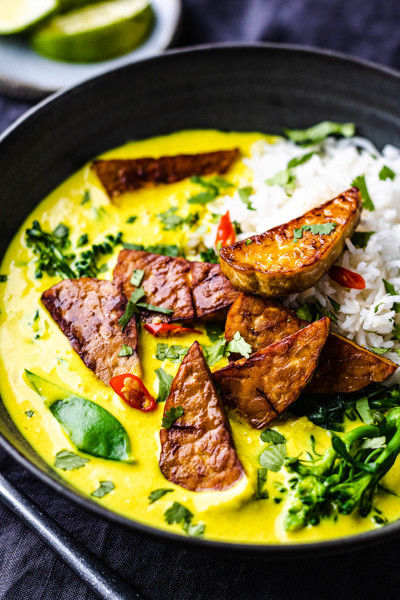
This Thai red curry noodle soup is fairly spicy but not overly so, it’s pleasantly spicy to me, but you can dial the level of spice up or down a bit depending on your personal preference and on how hot your curry paste is. This Thai red curry noodle soup is comforting and packed with things that would keep you full – your favourite noodles, vegetables – I used tenderstem broccoli but use whatever veggies sound good to you and some form of tofu. I used tofu puffs as they are sponge-like and very satisfying in a soup, but fried or baked tofu or tempeh would also work beautifully. We’ve been really enjoying this simple yet comforting soup and I hope that you’ll give this recipe a spin too!
MORE ABOUT THE INGREDIENTS
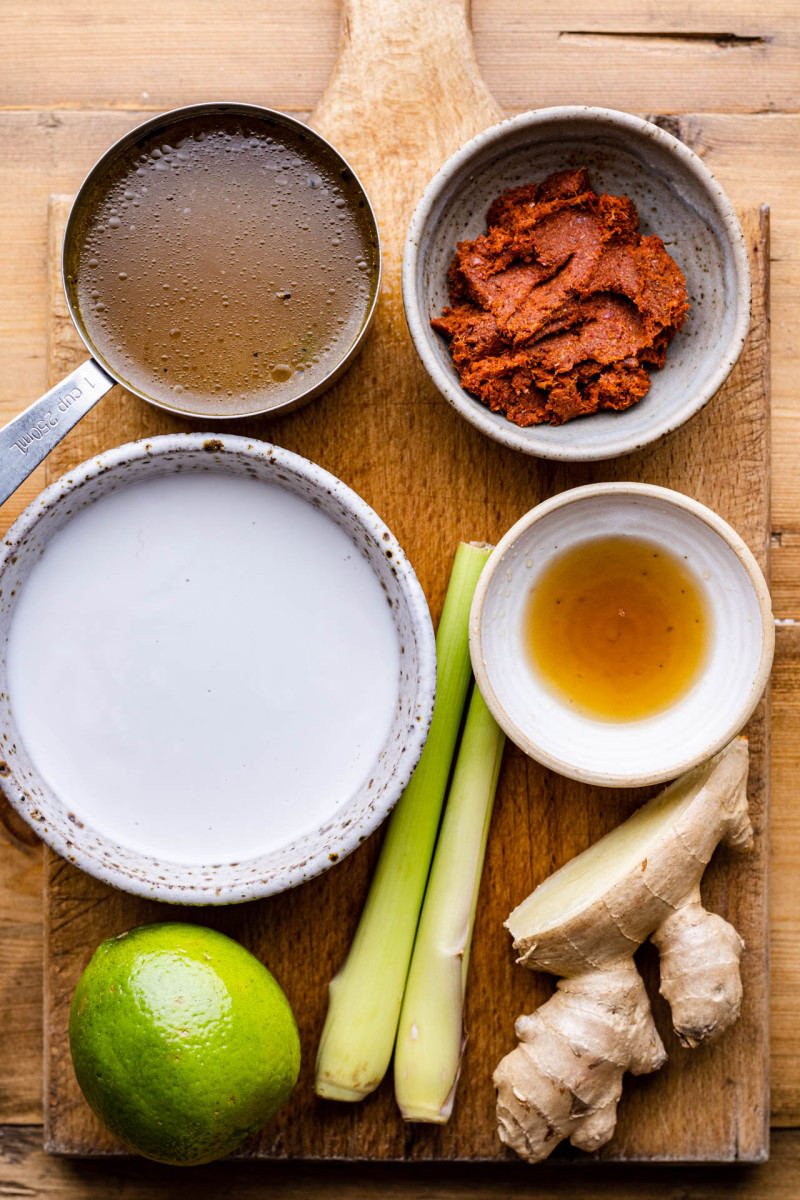
THAI RED CURRY PASTE – a good Thai red curry paste is the most important ingredient here. Sure you can make your own but it’s a lot of extra effort and if you are after a quick and tasty meal, it’s really no that necessary. Mae Ploy is a good Thai paste brand that comes in a regular version and in a vegetarian one too. Aroy-D is another good bran that offers shrimp-free paste.
OIL – while traditionally coconut milk can be used on its own to bloom the curry paste, it is easier to do with oil. Pick a neutral oil with a high smoke point like peanut (ground nut), rice bran or rapeseed.
FULL COCONUT MILK – coconut milk is another key ingredient here, I recommend using a full fat coconut milk that does not contain anything else other than coconut and water. A can of coconut milk that contains stabilizers makes it incredibly hard for you to know when the paste has been fried off enough and it does not split.
LEMONGRASS & GINGER – both lemongrass and ginger are totally optional, but I find that shop-bought curry pastes – no matter how good – lose some of their fresh, citrusy notes. This is why I add a stalk of bruised lemongrass to the soup and some julienned ginger too.
STOCK – a good stock is another ingredient that’s key to the soup’s flavour. I made my own using veggie off cuts, coriander stalks I had, shiitake and kombu but you can totally buy quality veggie stock these days.
LIME – a squeeze of lime is lovely to finish the soup off and balance its flavours. Don’t add the lime juice until the end though as its fresh flavour won’t survive, add it as a finishing touch.
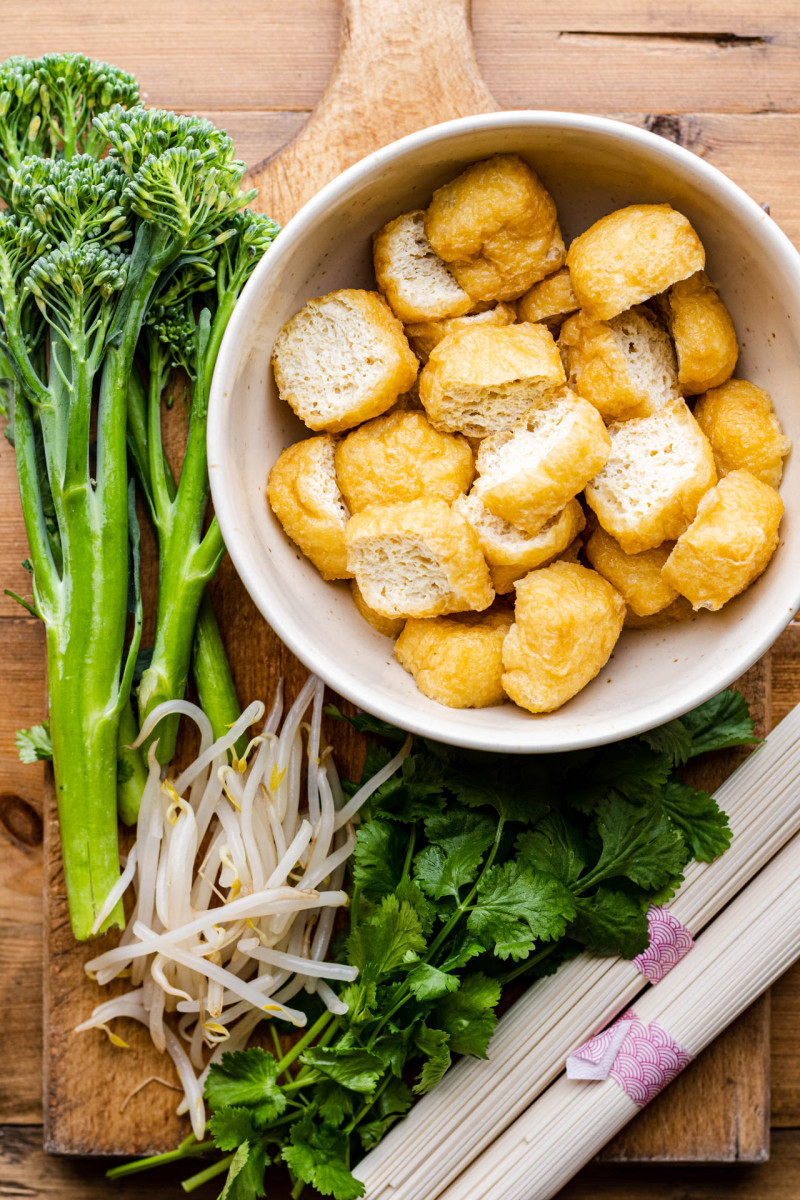
NOODLES – use your favourite noodles to make the soup into a Thai red curry noodle soup. I would suggest 60-100 g (2-3.5 oz) per person, depending on appetite.
VEGGIES – tenderstem broccoli was my choice of veg to make this soup more nourishing and to add another texture but anything you like works – green beans, pak choi, sweet potato would all work really nicely too.
TOFU PUFFS – tofu puffs were a bit of an impulse by at an Asian supermarket. They are great in a soup as they soak up its flavours really well. Straight out of the packet they tend to be greasy so I cut them in half and blanch them in boiling water for 1 minute to get rid of excess grease.
CORIANDER – I am a coriander lover and its citrusy flavour works really well with Thai flavours. This is why I used fresh coriander to finish this soup before serving but if you are not a fan, you can, of course, skip it.
BEANSPROUTS – breansprouts are very easily accessible and make a great, crunchy and fresh topping for curry soups.
HOW TO MAKE IT?
1)Fry off curry paste
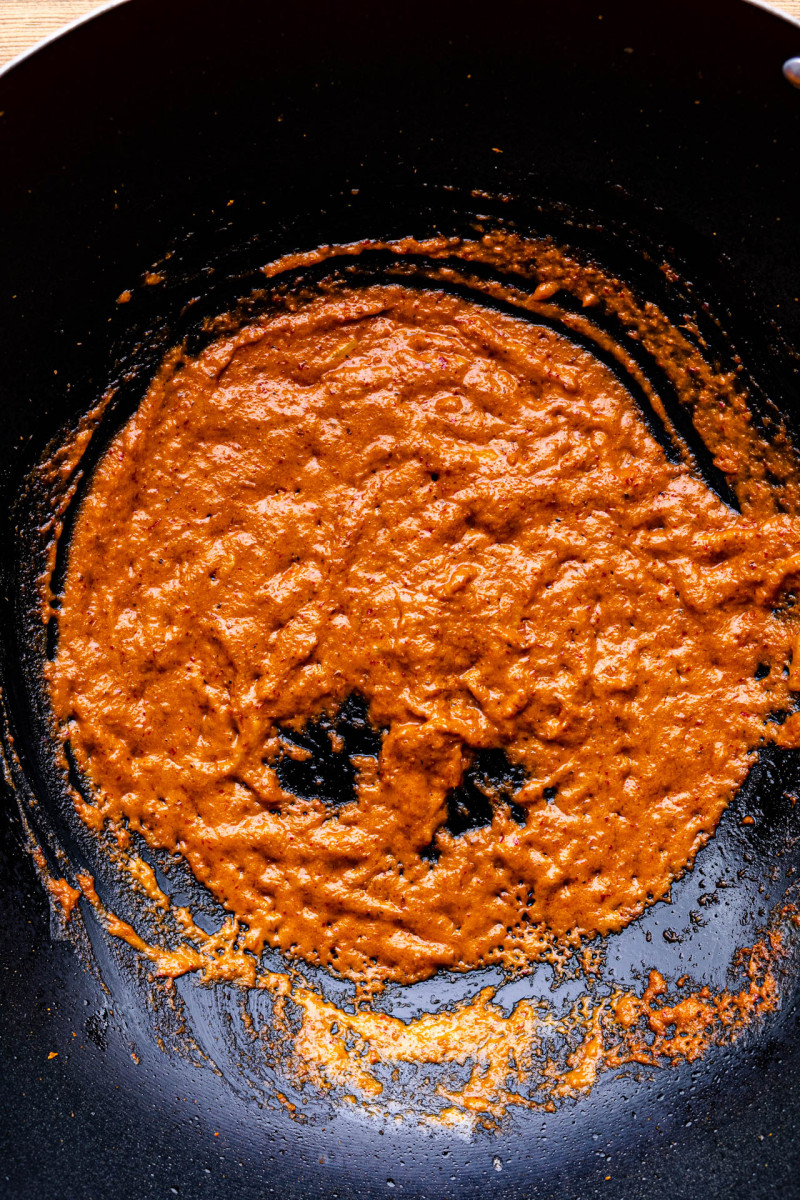
A good Thai curry relies on a good quality curry paste and on a proper technique. No matter how good the paste is, if it’s not handled properly your curry will not taste good. The curry needs to be bloomed in fat – full fat coconut milk (traditional) or oil to release natural aromas and to mellow out all the flavours. First you will see small pools of red oil separating from the rest of the mixture, once that happens the process of blooming the aromatics and spices in the paste has started and you want to carry on doing that for another 2-3 minutes. It’s important to keep the flame medium and if the paste looks dry at any point, you can add more coconut milk.
2)Add stock, season & simmer
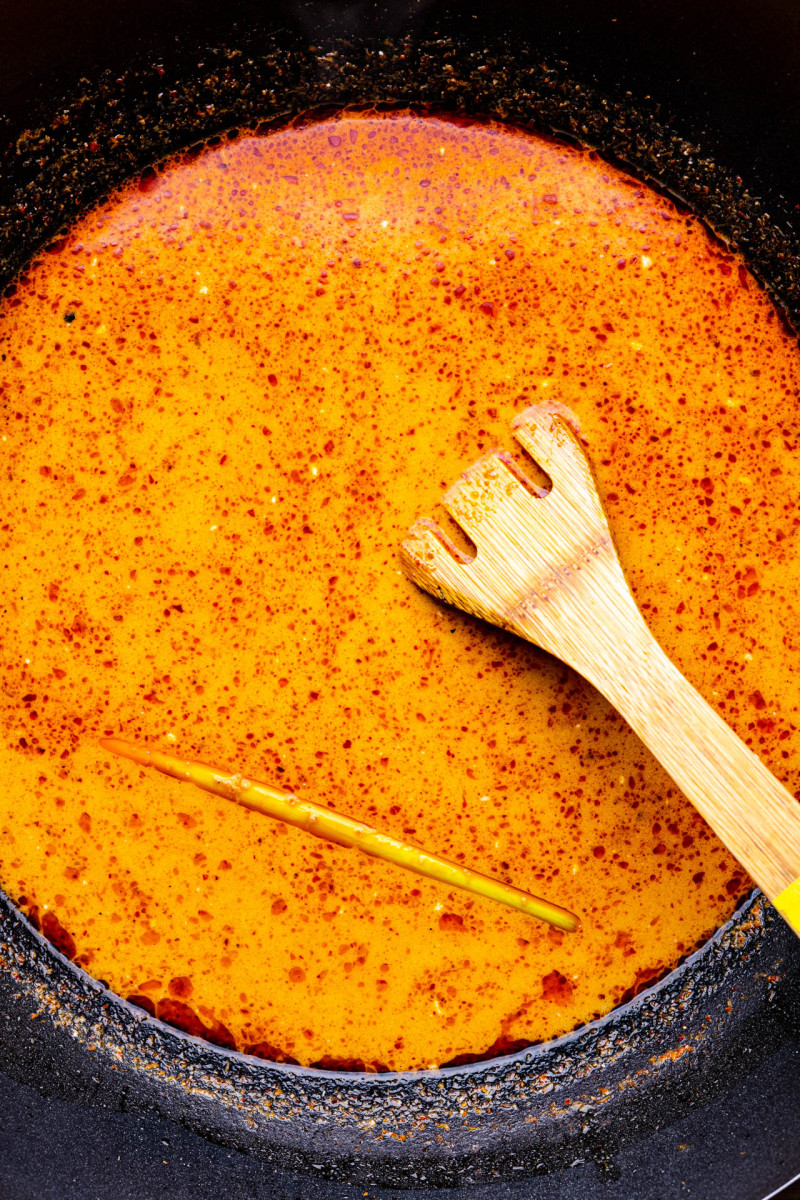
Once the paste has been properly bloomed, you can add stock, more coconut milk if desired and adjust seasoning. Simmer the curry for about 5 minutes and only add lime juice at the very end as its fresh flavour is volatile and it gets lost during cooking. You can cook your noodles and veggies and tofu puffs in the curry, but I prefer doing that separately to have greater control. Tofu puffs are quite greasy, to get rid of extra grease, cut them in half and then blanch in boiling water for 1 minute before submerging in the soup.
THAI RED CURRY NOODLE SOUP
- 15 ml / 1 tbsp high smoke point oil, I use peanut
- 400 g / 14 oz full fat coconut milk (additive-free, see notes)
- approx. 50 g / 2.5 tbsp Thai red curry paste (I used Mae Ploy vegetarian)
- a chunk of ginger, julienned (optional)
- 1 lemongrass stalk, bruised (optional)
- 100 g / 3.5 oz tofu puffs (or 300 g/ 10.5 oz tempeh or pressed tofu)
- 240 g / 8.5 oz favourite noodles
- 200 g / 7 oz tenderstem broccoli, green beans or similar
- 1.25 l / 5 cups of veggie stock, shop-bought or homemade*
- 1-2 tsp sugar
- vegan fish sauce, to taste
- lime juice to taste, I used 1 tbsp
- a handful of coriander, to serve
- a handful of beansprouts, to serve
- Mix your curry paste with half a tin of full fat coconut milk, try to get rid of any lumps. If your coconut milk isn’t just water and coconut, skip this step and fry off the paste in 2 tbsp of oil instead.
- Heat up a wok until lightly smoking add oil and paste mixed in with coconut milk.
- Sauté the curry paste, stirring often, until the mixture starts to split – you’ll start to see little pinholes of red oil coming to the surface, here and there.
- Once the oil starts to separate, continue to sauté for another 3-5 minutes to make sure the paste is cooked off properly before adding stock. If at any point the paste starts to look dry, add another splash of coconut milk to stop it from burning and make sure your heat isn’t on too high.
- Take first layer of lemongrass leaves off, then use a rolling pin to bruise the stalk and add it to the soup along with julienned ginger.
- Once you’ve fried the paste, slowly add the stock and more coconut milk if you want a creamier soup (I only used just over half a tin).
- Taste and season with vegan fish sauce and sugar. Don’t add lime juice until the very end as its fresh flavour is volatile and it will be lost during prolonged simmering.
- Bring the soup to a gentle simmer and simmer for about 5 minutes.
- Cook your veggies, noodles and tofu separately for best results. For noodles, follow instructions on the packet. For broccoli, cut into bite-size pieces halving the stems lengthwise if thick and simmer for 3 minutes. Cut your tofu puffs in half, blanch in boiling water for a minute to get rid of excess grease.
- Taste and season once again then divide between bowls. Top with cooked veggies, noodles and tofu puffs. Garnish with fresh coriander and beansprouts.
*COCONUT MILK: it’s important that you use a can of coconut milk that does not contain stabilisers (I recommend Aroy-D, for example). If you cannot get hold of coconut milk without stabilisers, bloom the paste (i.e. sauté it in fat until the fat separates) in 1-2 tbsp of neutral (grapeseed, peanut, rice bran) oil instead of coconut milk and add coconut milk only after you’ve bloomed the curry paste.