Vegan gyoza with tempeh
Vegan gyoza with tempeh
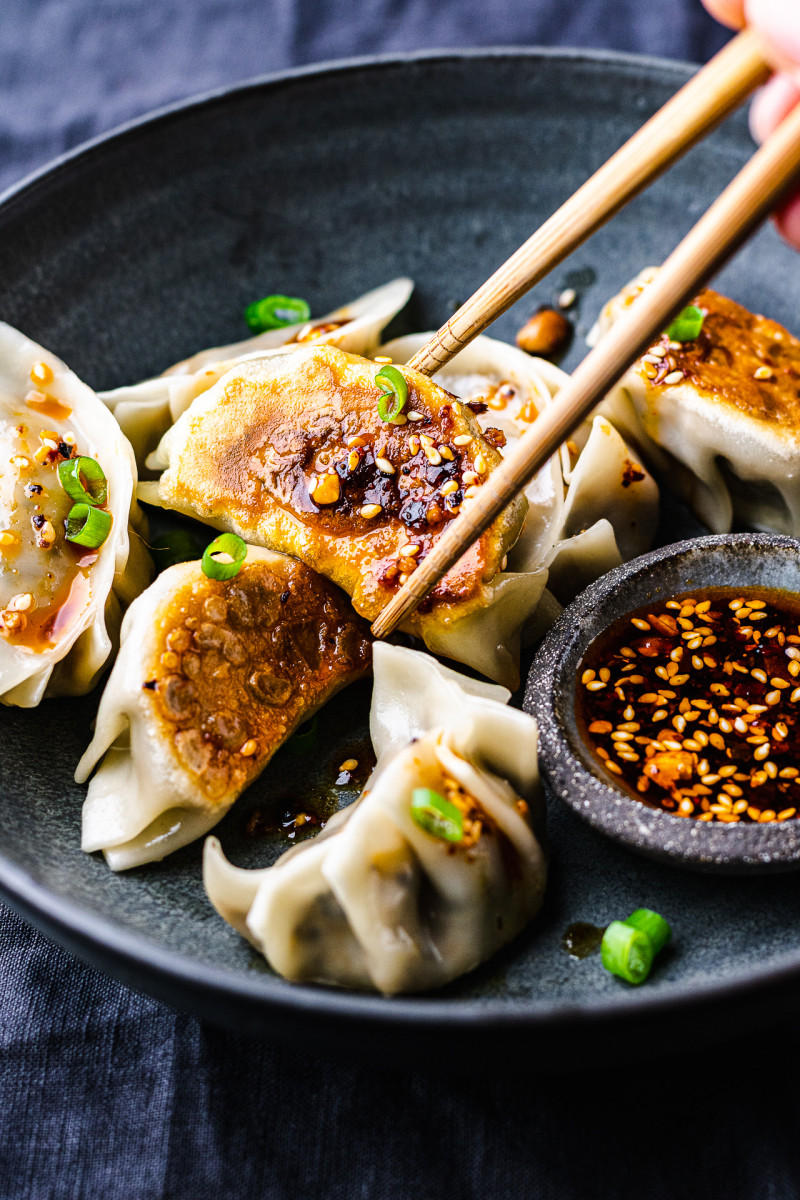
Today’s recipe for vegan gyoza with tempeh is a delicious yet in no way authentic recipe. This simple dish combines technique and ingredients from a few very distinct South East Asian cuisines in one shop-bought wrapper to deliver an explosion of flavour and tonnes of comfort.
The idea of steam-frying the dumplings until tender yet crispy originated in China, the tempeh that gives these crispy dumplings their meatiness comes from Indonesia (the island of Java specifically) and kimchi is a Korean staple. To top it all off, I also added a portion of mushrooms to the filling inspired by something I grew up on which is mushroom and sauerkraut pierogi.
I have been suffering from a lot of anxiety lately and so I was craving something familiar and comforting to eat, as well as something I could occupy my hands with to help myself stay grounded and present. These vegan gyoza certainly delivered on both fronts and I hope you’ll enjoy them too.
MORE ABOUT THE INGREDIENTS
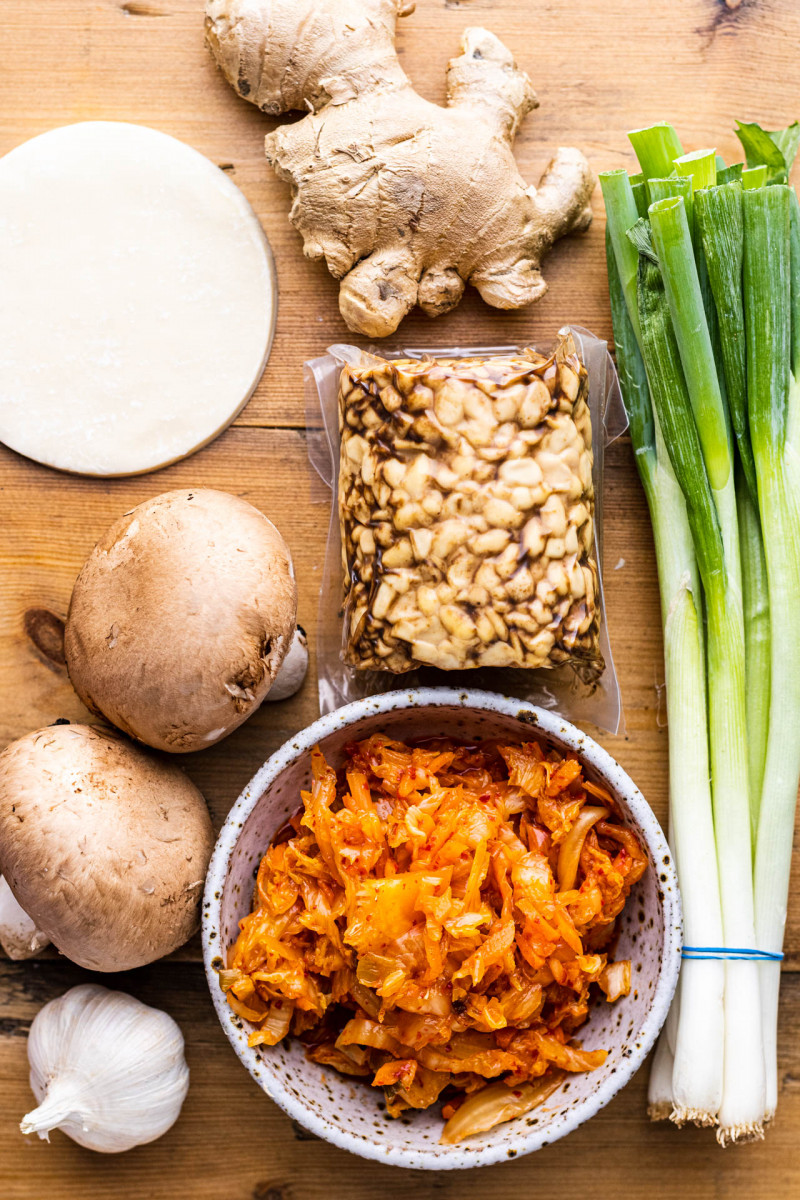
MUSHROOMS I love using mushrooms in combination with tempeh to create mince-like mixture. Mushrooms add plenty of rich, savoury flavour and another texture to these dumplings. I used brown chestnut (also known as cremini) mushrooms as that’s what I can easily find locally but other types of mushrooms, especially shiitake, would work well too.
TEMPEH: Tempeh is a fantastic source of plant-protein, one that I unfortunately don’t eat often enough so I decided to incorporate it into this gyoza filling. I used smoked tempeh as I am fan of that taste but regular tempeh works well too. Tempeh does naturally have a slightly bitter aftertaste and some people are sensitive to that. If you are one of these people, try slicing it thickly and steaming it over a pot of simmering water for 10-15 minutes to neutralise that bitterness. I find that once mixed in with other ingredients and seasonings the bitterness does not bother me at all.
KIMCHI: I love how kimchi adds much needed acidity and spiciness to fairly bland tempeh and mushrooms. It’s also full of good for your probiotics so there is plenty of reason to enjoy it.
SPRING ONIONS, GARLIC AND GINGER: These three ingredients are the holy trinity of South East Asian cooking – meaning they form the base of most savoury dishes. The tops of spring onions (known as scallions in the US), work well as a garnish too. You could replace spring onions with a small onion or a couple of shallots, but ginger and garlic are necessary in my opinion.
SOY SAUCE: Soy sauce is added to season and flavour the filling. As soy sauce is rich in umami, it doesn’t just add saltiness, but also meatiness & savouriness to this meatless flavour. If making this dish for someone who is gluten-free use tamari (and make your own gluten-free wrappers)
HOW TO MAKE IT?
1) PREPARE THE FILLING
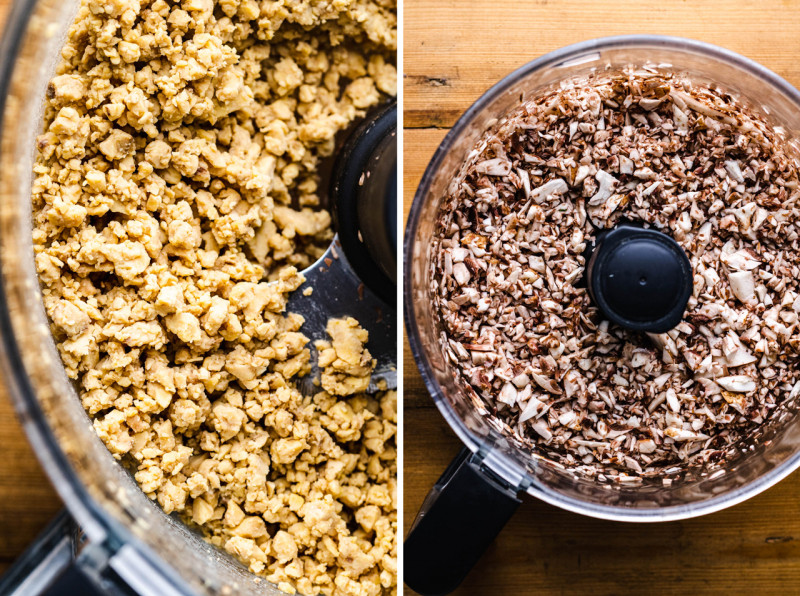
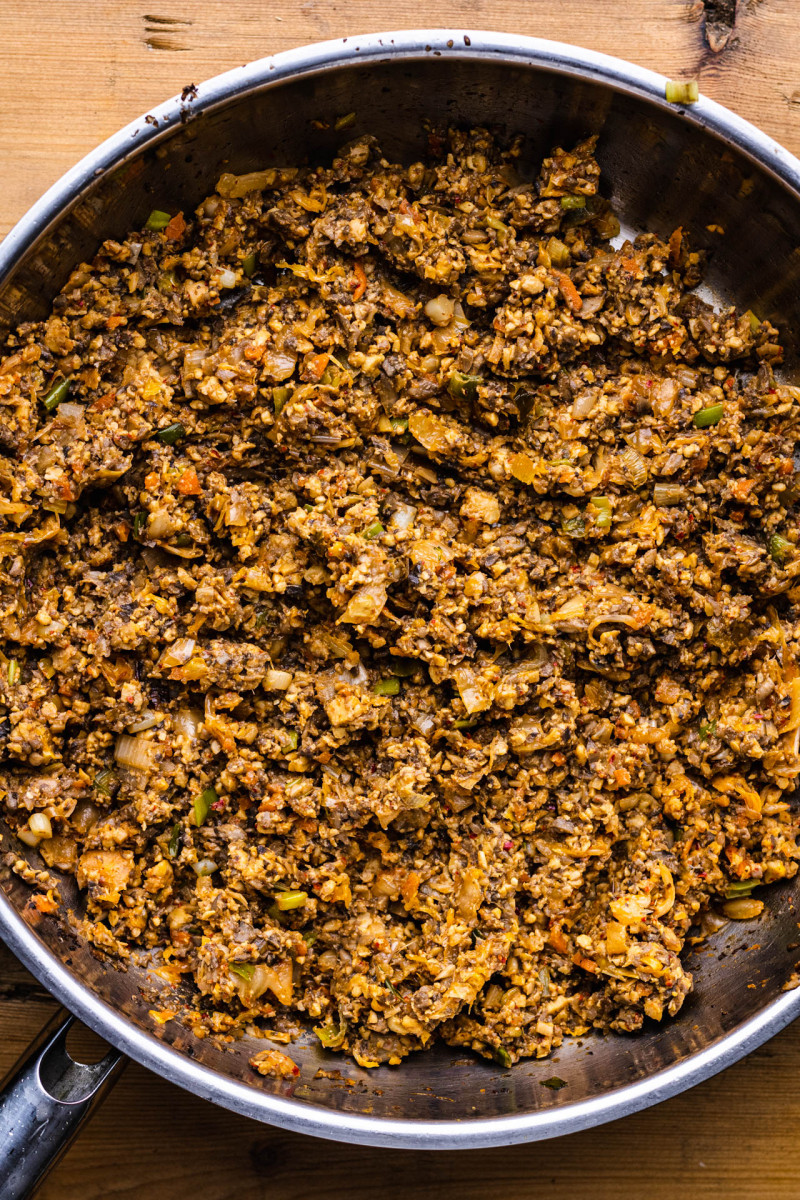
For the filling to come together quicker, I recommend using your food processor. It is really helpful to process both tempeh and mushrooms. I personally prefer to chop my kimchi roughly by hand as food processor tends to overprocess things that are wet and mushy. To begin with, I like to flash fry my minced tempeh for a better texture but you can skip this step if you want to speed things up. Next, I pan fry my aromatics and mushrooms in a bit of oil until the mushrooms turn dark brown and all excess moisture cooks out. Finally, I add roughly chopped kimchi and season to taste.
2) FILL & FOLD
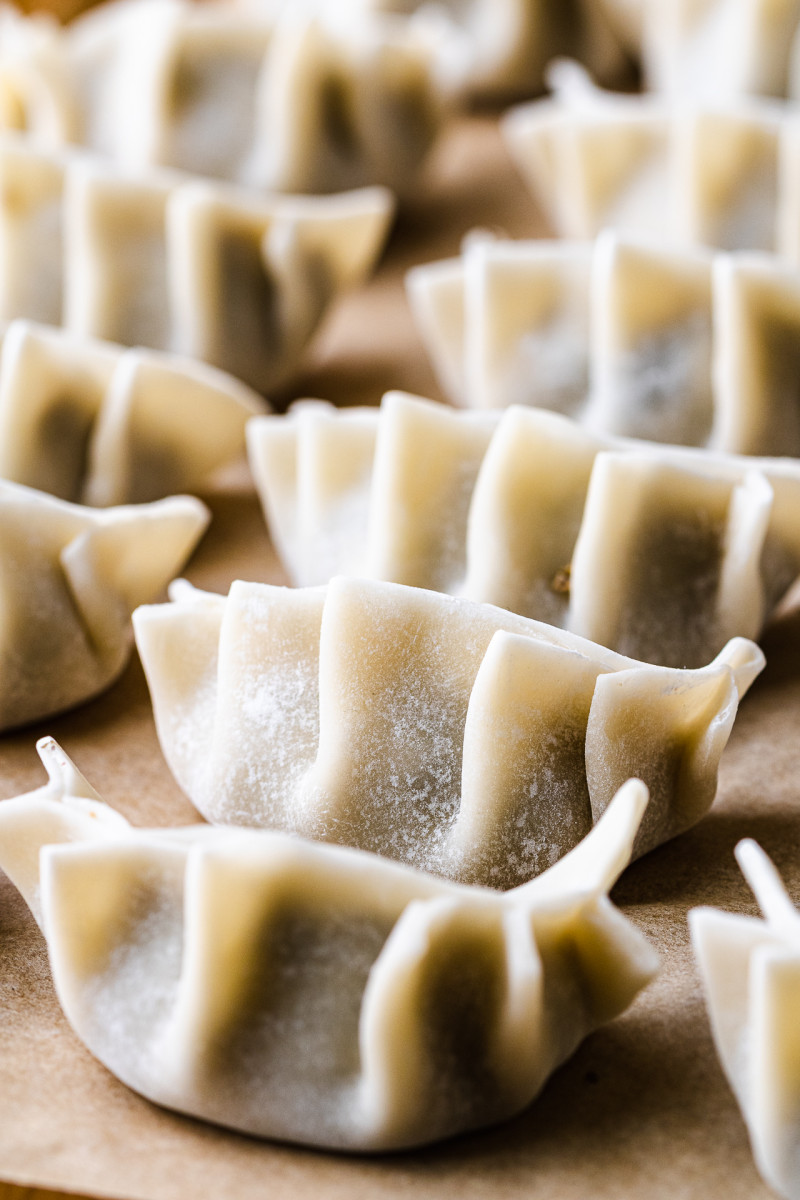
Once your filling is cold, it’s time to start filling and folding your gyoza. Place a piece of gyoza dough in the palm of your hand, paint a bit of water around the filling and then close the dough above the filling. You can do so by simply pressing the dough into a moon shape with your fingers or you can crimp the dough while you are at it for a more pleasing look – regardless, they will taste the same 😉 .Place each finished dumpling under a damp kitchen cloth so that the gyoza dough stays moist and supple.
3) FRY-STEAM-FRY
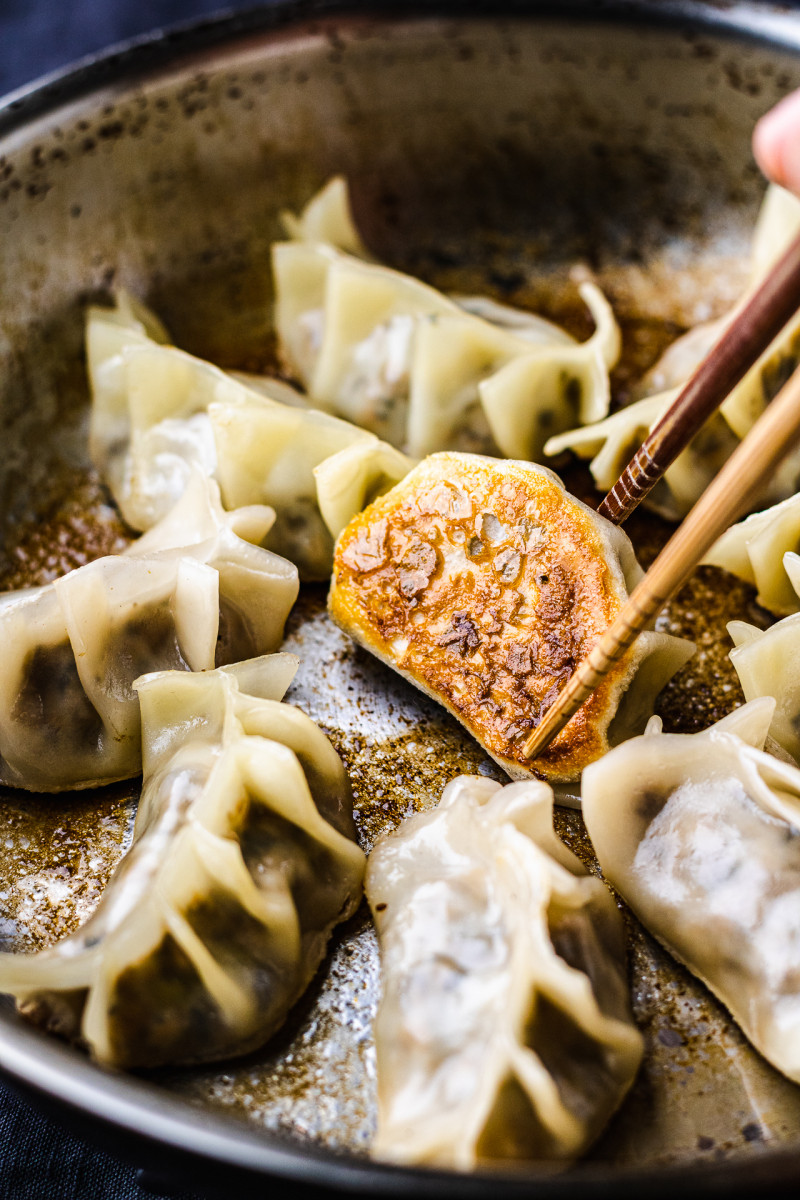
Once your dumplings are folded, preheat a small pan with a lid on low-medium heat to FRY-STEAM-FRY your gyoza. Add about a teaspoon of oil. Once it’s heated up arrange 10 or so dumplings on the pan. Allow the dumplings to cook until the bottoms are browned then add a splash of water to the pan and cover it with a lid. Steam the dumplings for about 10 minutes then take the lid of and add another teaspoon of oil to the pan and carry on cooking for 2-3 minutes for all excess moisture to evaporate and the bottoms to crisp up again. Gently prise the dumplings off with a spatula or a butter knife and place in the preheated oven while you cook the rest. You may need to clean your pan between batches!
- 250 g / 8.8 oz oz chestnut / cremini mushrooms
- 200 g / 7 oz kimchi
- 200 g / 7 oz tempeh, I used smoked
- vegetable oil
- 8 spring onions / scallions, sliced small
- 3 garlic cloves, diced finely
- 2-3 tsp grated ginger, adjust to taste
- 15 ml / 1 tbsp soy sauce (or tamari), more to serve
- approx. 50 gyoza skins/wrappers*
- chilli oil, to serve
- Chop cleaned mushrooms into thick slices then pulse in a food processor until well chopped but be careful not to overprocess. Empty the food processor and do the same with thickly sliced tempeh.
- OPTIONAL STEP: Preheat a large work or frying pan on low-medium heat, add 1-2 tbsp of oil and tempeh crumbles. Stir-fry until dry and browned.
- If frying tempeh, remove it from the pan as set aside. Clean the pan and preheat 2 tbsp of oil in it. Add white and light green parts of spring onion. Sautee for a few minutes to soften, then add garlic and ginger. Sautee for a few more minutes, until all of the aromatics are softened and fragrant.
- Add in chopped mushrooms. Cook, stirring from time to time, until they turn dark brown and all excess water cooks out.
- Add minced tempeh, and roughly chopped kimchi. Season with about a tablespoon of soy sauce – taste while seasoning though in case your kimchi is saltier than mine, in which case you may need even less soy sauce. Allow the filling to cool off completely.
- Grab a small bowl with water, line a baking tray with a piece of paper and a clean tea towel.
- Place a dumpling skin in the palm of your hand, place one and a half teaspoon (I use my measuring spoon) of filling in the middle. Dip your finger in the bowl with water and wet the perimeter of the dumpling skin then seal the dough above the filling. You can simply just seal the dumpling by pressing the two pieces of dough with your fingers or you can crimp the dough in a decorative manner if you wish (You Tube has tutorials on many cute crimping styles).
- Preheat the oven to about 100° C / 210° F. Preheat a small pan (mine is 20 cm / 8 inch dia) with a lid on low-medium heat. Add about a teaspoon of oil. Once it’s heated up arrange 10 or so dumplings on the pan. Allow the dumplings to cook, undisturbed, for about 2-3 minutes.
- Once the bottoms are nicely browned, add about 150 ml (½ cup + 2 tbsp) of water to the pan and cover it with a lid. Steam the dumplings for about 10 minutes then take the lid of and add another teaspoon of oil to the pan and carry on cooking for 2-3 minutes for all excess moisture to evaporate and the bottoms to crisp up again. Gently prise the dumplings off with a spatula or a butter knife. Place them, covered, in the preheated oven while you cook the rest.
- Divide gyoza between plates. Serve with a small serving of soy sauce mixed in with chilli oil to taste.
*SKINS/WRAPPERS: gyoza skins/wrappers can be purchased in Asian supermarkets, they are often accidentally vegan so if you want to make sure check the ingredients list. You can also make them but it’s a bit of a project so be warned. Here is my recipe for regular dumpling skins and here for GLUTEN-FREE ones.