Yellow curry with tempeh
Yellow curry with tempeh
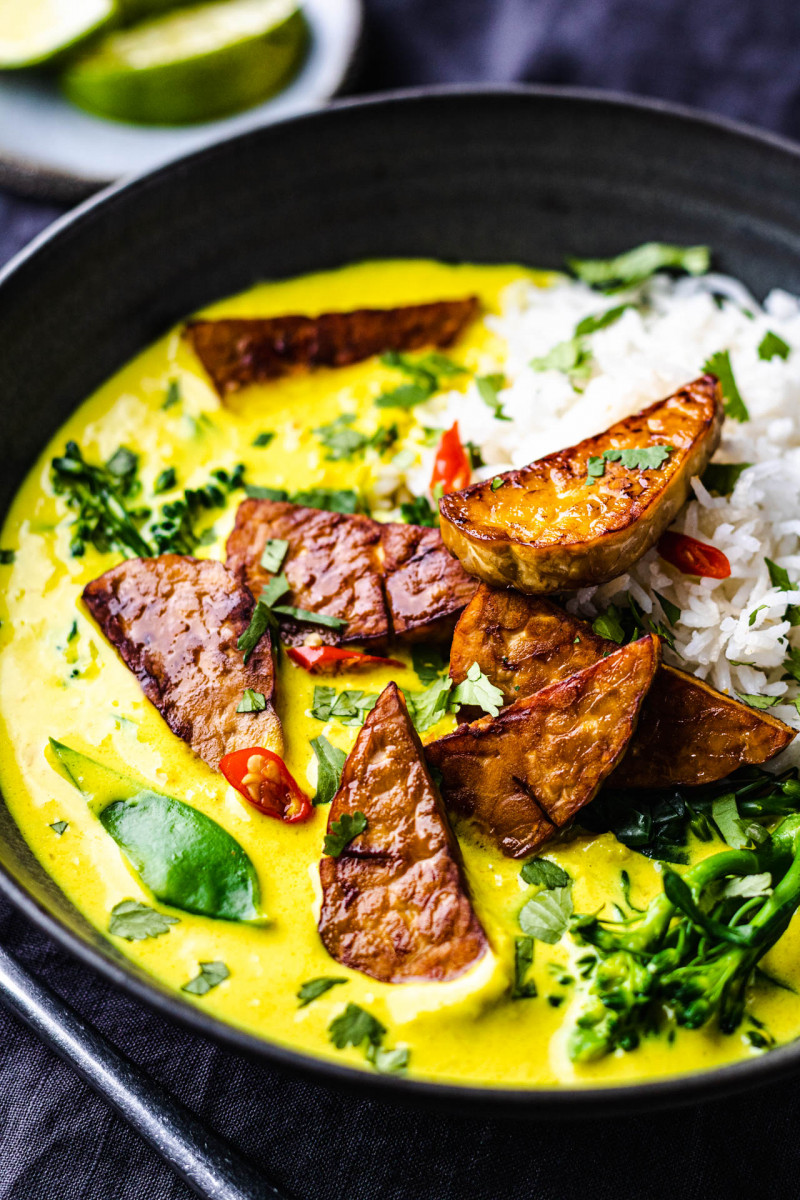
You know that hankering for lighter and brighter food you get when the weather starts warming up. That has been me lately. I was after something bright and uplifting yet still a bit cosy as the evenings remain chilly and this yellow curry with tempeh has totally delivered. It delivered so well in fact that we have been eating it on repeat for the last 2 weeks.
This yellow curry number is inspired by the Thai classic, but it’s not an authentic recipe by any means. My aim was to be able to pick all the ingredients at my local supermarket without having to make a separate trip to an Asian store or having to order online. I also wanted this curry to be a dish that’s achievable on a school night and I totally think it is. Having said that this yellow curry sauce, like most curries and stews, is worth making at least a day in advance and this gives all the flavours a chance to develop and shine even brighter.
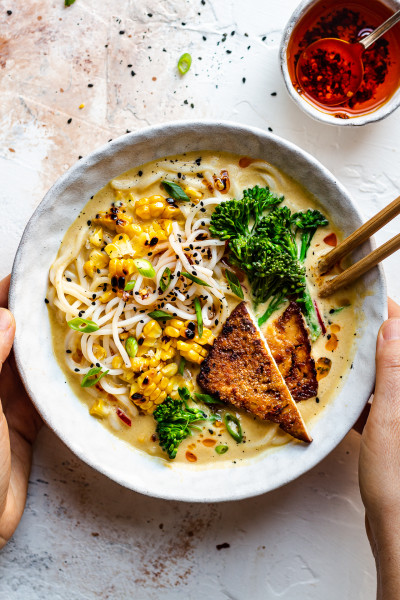
I paired this sweet and sour yet creamy with coconut milk sauce with broccoli and mangetout and some fried tempeh for protein. While you can totally cook your veggies in the sauce itself, I personally prefer to do so separately as it’s not a lot of extra work and it does give you more control over the doneness of your vegetables. I like mine to still have a bit of a resistance and to keep their appetising green colour as we do eat with our eyes after all. As a protein, I added seasoned and pan-fried tempeh, but you can also bake it in the oven if you don’t want to use less oil overall. We’ve enjoyed taste testing this curry a lot so I hope that you’ll enjoy the resulting recipe just as much.
MORE ABOUT THE INGREDIENTS
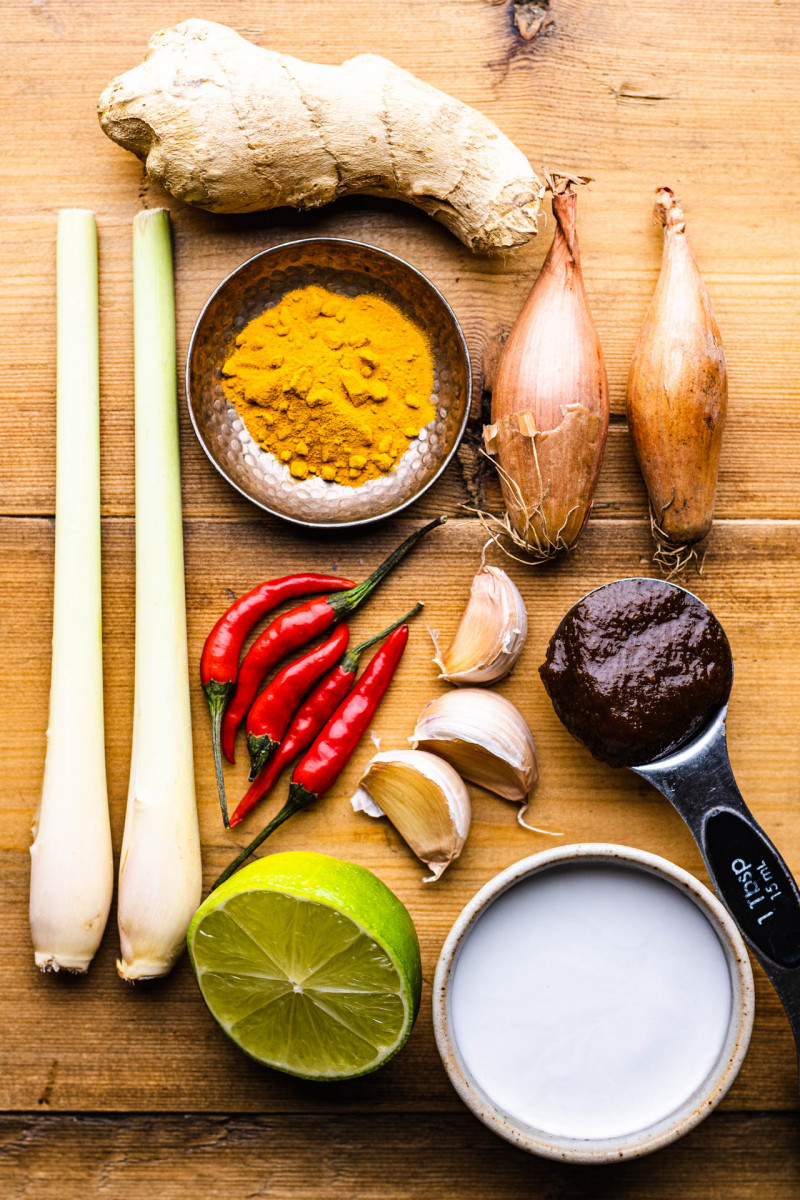
SHALLOTS: Curry paste needs to types of alliums. One of them being shallots or onions and the other garlic. I used shallots rather than onions as they are milder in taste, I used banana shallots but regular shallots work well too.
GARLIC: Garlic is the second type of allium that most curry pastes are build upon. I used 6 garlic cloves, it may seem like a lot but it’s a big portion.
GINGER: Ginger or galangal is a mainstay of Thai curry pastes. While the latter is more authentic, it is also rather hard to source outside of South East Asia so ginger is a common substitute. I used a large chunk of ginger for a bit of a kick, you can adjust the amount to your own taste.
CHILLIES: Chillies provide much needed heat and it is sometimes difficult to know how much to put in as their punchiness varies, even within the same variety. For a subtle kick, I found that using 4 red bird eye chillies is optimal.
LEMONGRASS Lemongrass is an aromatic herb that adds a bright, complex citrusy flavour to the curry paste. You can buy it in a jar too although I have not tried using it in that form yet.
TAMARIND Tamarind is a tropical fruit that is used in Indian and South East Asian cooking, it adds sour taste that contrasts with the smooth flavour of coconut milk beautifully. It comes in a jar, as a dark brown puree so it’s very easy to use. Its intensity differs between brands so add little by little tasting along the way.
LIME Like tamarind, lime adds acidity to the curry sauce but it is different in character. Tamarind adds sour base notes that stand up to long cooking time, while lime juice is used as a finishing touch. It offers bright acidic flavour that balances the coconut milk off nicely.
COCONUT MILK Coconut milk adds creaminess and offers cooling background against chillies’ inherent fierceness. I recommend using full fat coconut milk for a nicer mouthfeel.
SPICES Turmeric & mild curry powder are dried spices added at the end of paste cooking time.
HOW TO MAKE IT?
1) BLITZ YOUR AROMATICS INTO A PASTE
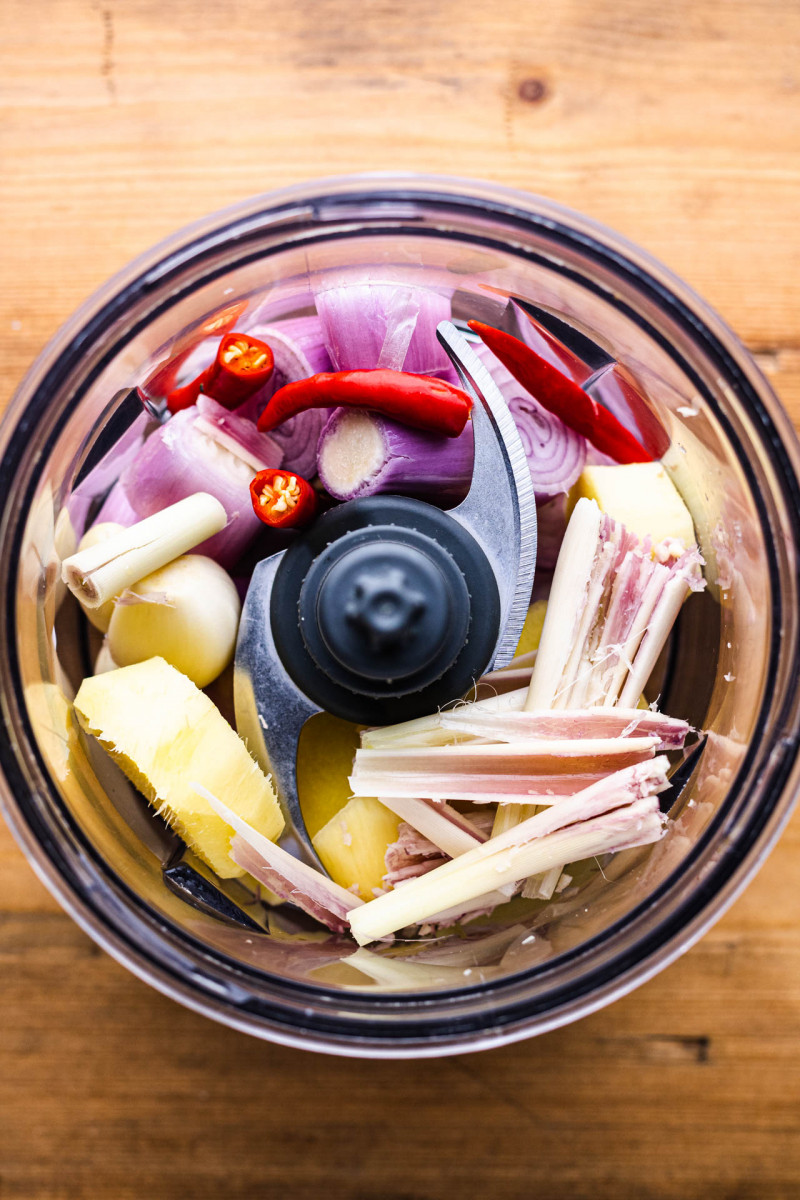
Prep your aromatics, chop them roughly and place in a small blender or a chopper. Process until everything is minced well. You can add some oil at this point to turn these minced aromatics into a paste. Traditional curry paste relies on oil or coconut milk, but I found that there is no need for that because I am frying these minced ingredients in a generous amount of oil already which will allow the aromatics to bloom, i.e. release their oils, which hold most flavour. If you are absolutely not bothered about using less oil in your cooking, simply add a couple of tablespoons of oil to the chopped aromatics until they form a paste.
2) FRY AROMATICS AND SPICES OFF
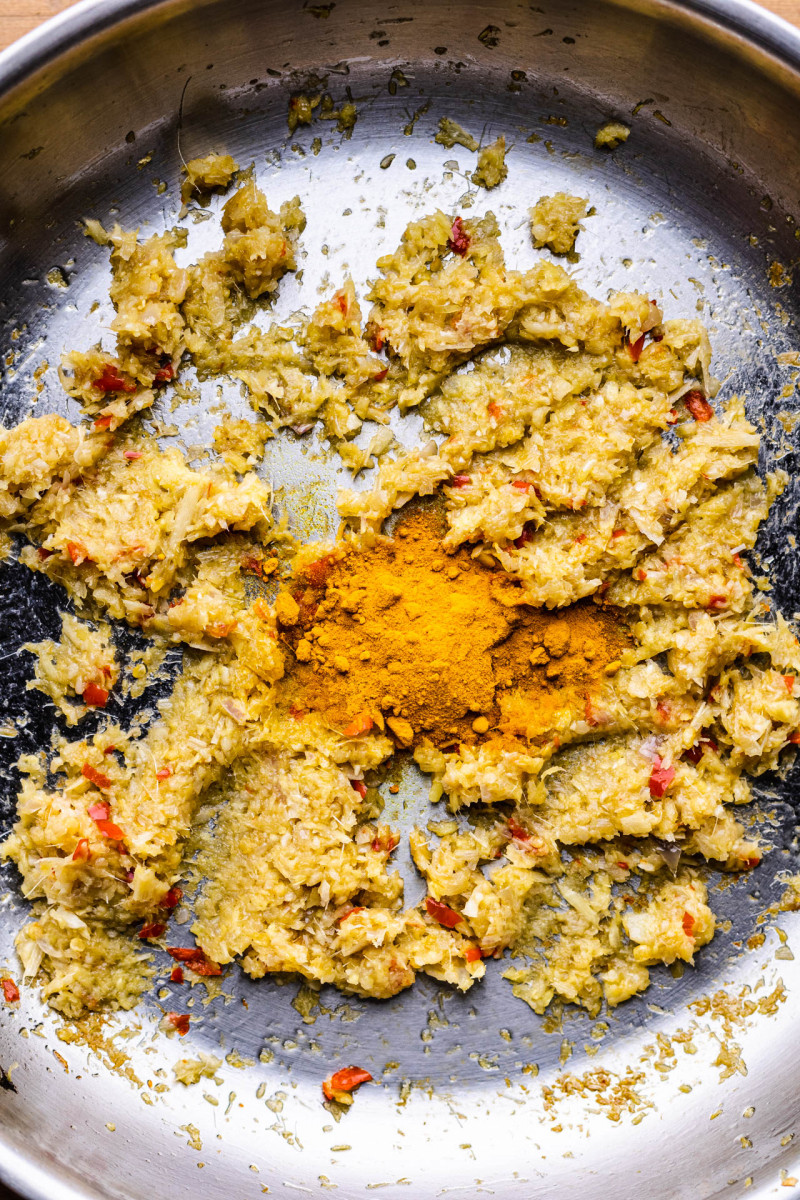
Fry minced aromatics in a generous amount of oil (I found 3 tbsp to be optimal) until they are no longer opaque and fragrant – about 5-10 minutes. Use low flame and stir frequently so that the paste does not burn. Finally mix turmeric and curry powder into the aromatics and continue frying on low heat for another 60 seconds or so.
3) ADD COCONUT MILK
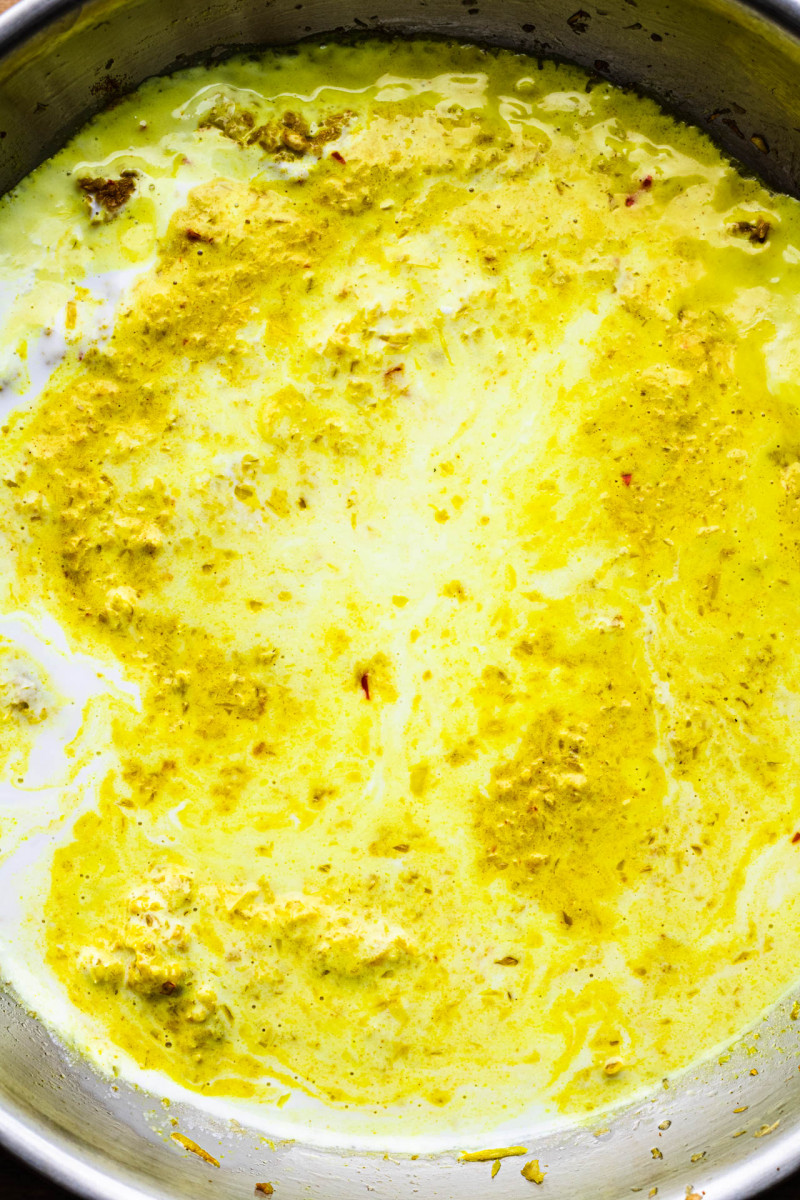
Next add in coconut milk, tamarind, vegan fish sauce and a bit of water unless you prefer a thicker sauce. I like to add about a cup of water. Allow the sauce to bubble for about 10 minutes, taste and season with some sugar, more fish sauce if needed and some lime juice to finish the dish off.
4) COOK TEMPEH AND VEG
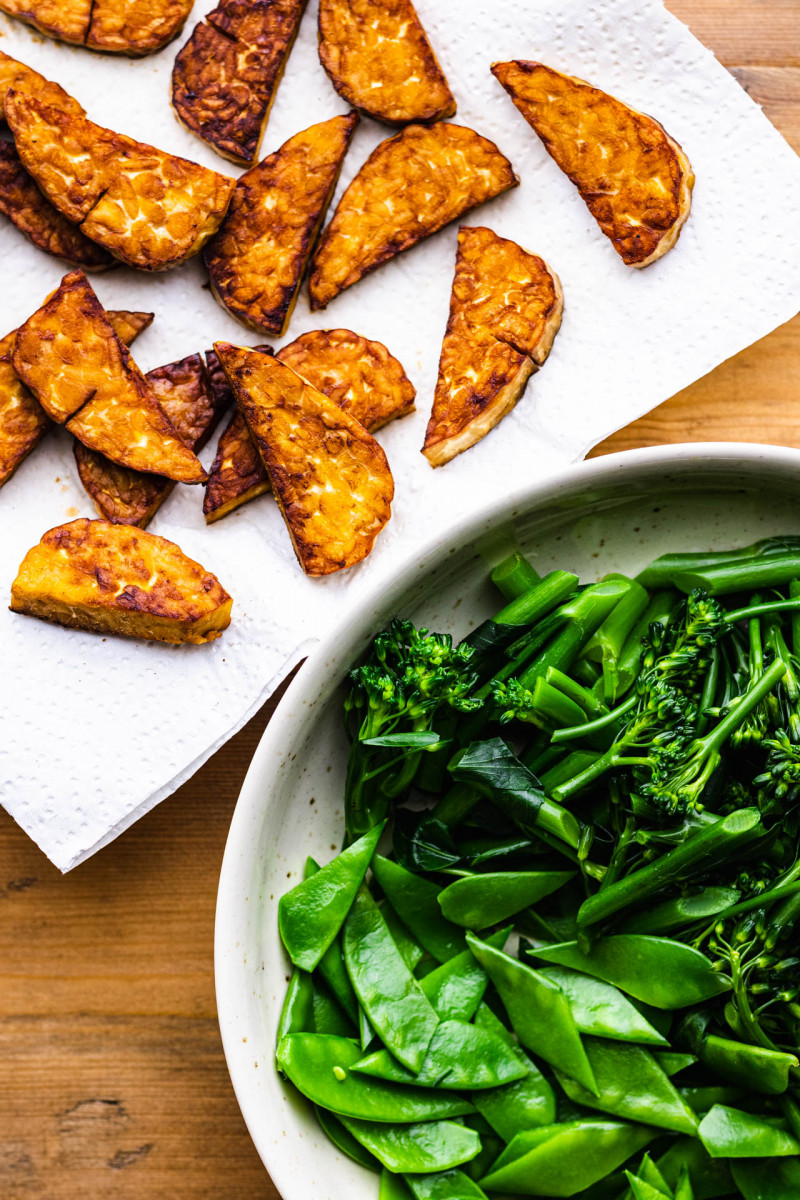
While the curry is bubbling away, prep the veggies and boil them in a pot of simmering water until just barely tender – about 3-4 minutes for tenderstem broccoli and 30-60 seconds for mangetout. Cut tempeh into bite size pieces, season with a bit of soy sauce (or tamari if gluten-free) and pan-fry until golden brown on both side. You can also bake them in a 200° C / 390° F oven for 30 minutes. Once your curry sauce is ready, either store it away for the following day for best flavour or serve over steamed rice, alongside broccoli and mangetout and fried tempeh. Top with chopped coriander.
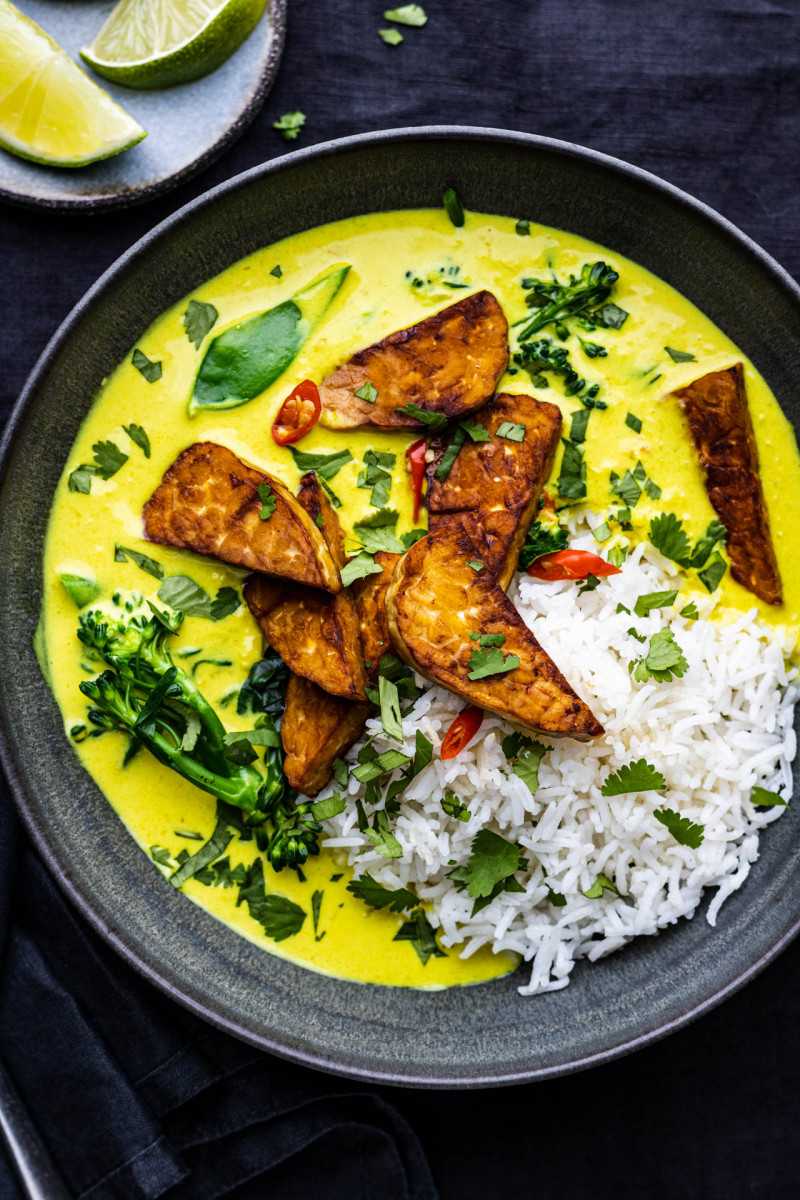
YELLOW CURRY SAUCE
- 3 medium shallots
- 6 garlic cloves
- 4 lemongrass stalks
- 60 g / 2 oz fresh ginger
- 4 birds eye chillies, more if you like more heat
- 3 tbsp / 45 ml oil, I used peanut
- 1½ tsp turmeric
- 1½ tsp mild curry powder
- 3 tbsp / 45 ml oil, I used peanut
- 2 x 400 g / 14 oz cans of full fat coconut milk
- 1-2 tbsp tamarind puree*
- vegan fish sauce or soy sauce (or tamari if gluten-free)
- 1-2 tsp sugar
- lime juice to taste
TOPPINGS
- cooked rice (enough for 6)
- oil, for frying (optional)
- 300 g / 10.5 oz tempeh
- 20 ml / 1½ tbsp soy sauce or tamari (if gluten-free)
- 200 g / 7 oz tenderstem broccoli
- 100 g / 3.5 oz mangetout
- fresh coriander, to serve
YELLOW CURRY SAUCE
- Put peeled and roughly chopped shallots, garlic, lemongrass, ginger and chillies in a chopper or a small food processor with half a teaspoon of salt and a couple of tablespoons of oil if you wish (I tend to skip the oil in the paste to make the dish a healthier). Process until all the ingredients are finely chopped.
- Pre-heat a large pan on a low-medium heat. Once warm add the oil and swivel it around the pan. Tip in chopped aromatics. Fry them off on low-medium heat for about 5-10 minutes until all the ingredients are opaque and fragrant.
- Next, stir turmeric and curry powder into the aromatics and fry off for a minute or so before adding both cans of coconut milk, about a tablespoon of tamarind to begin with and a cup of water (240 ml) to thin the sauce out – skip water if you prefer a thicker curry.
- Allow the sauce to bubble away for about 10 minutes. Taste and season with sugar, about 1½ tbsp of vegan fish sauce and lime juice to taste.
- Serve the curry sauce over cooked rice, alongside cooked tempeh and broccoli.
TOPPINGS
- Slice your tempeh into 0.5 cm / 0.2″ slices and into bite size pieces. Marinate in soy sauce for 10 minutes.
- Once you are ready to cook your tempeh, you can either fry it in batches in a bit of oil until golden on both sides (this produces tastier result as you can imagine). If you are health conscious, spread it on a lined baking tray and bake for about 30 minutes in a 200° C / 390° F oven.
- Cut broccoli into bite size pieces, cutting thicker stems in half. Simmer in a pot of lightly salted water until just tender, about 3 minutes for tenderstem broccoli and 30-60 seconds for mangetout.