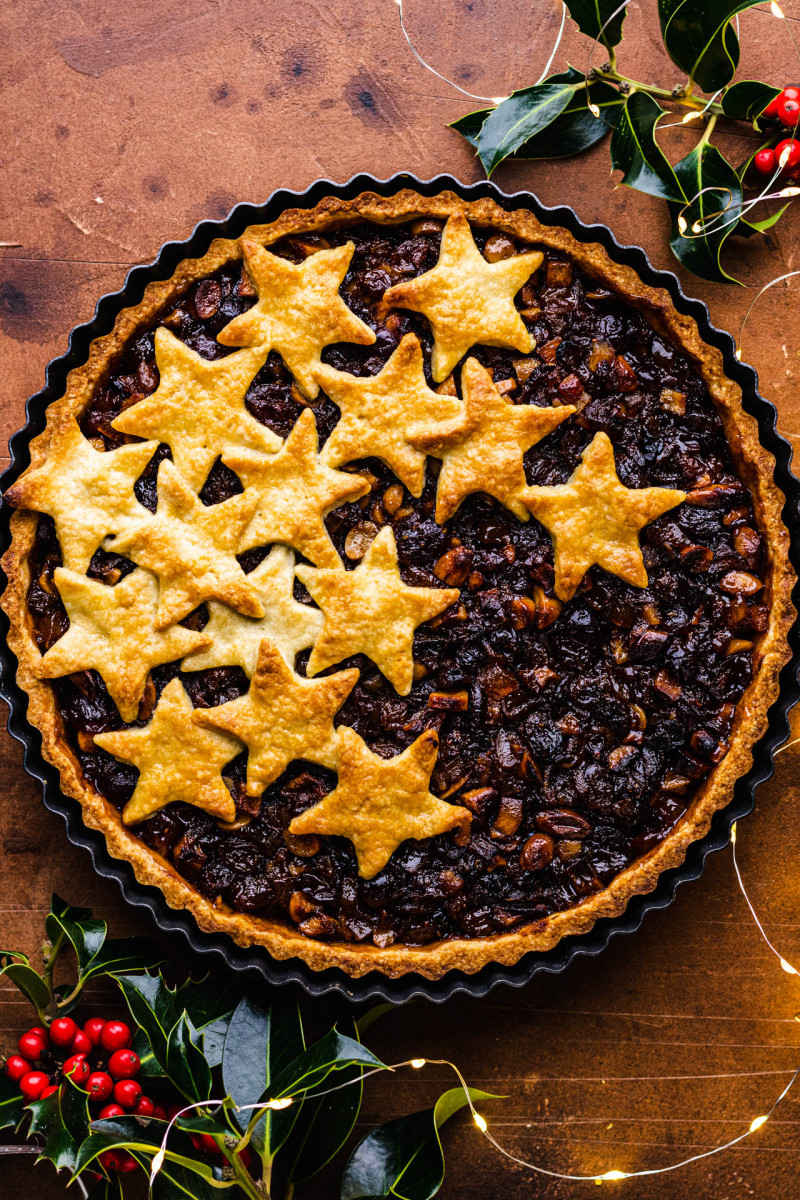
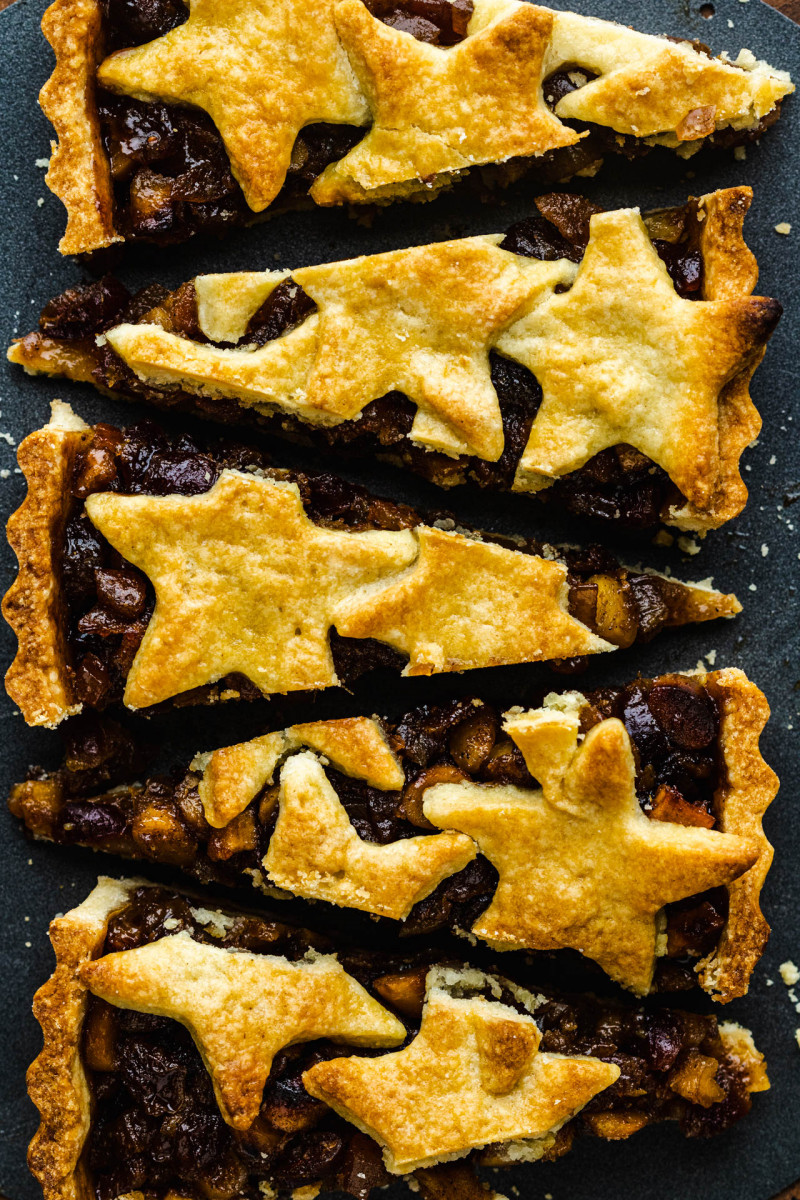
My vegan mince pie tart is dessert and a solution to a problem you may have. While I love making individual vegan mince pies myself, the pastry work can be quite fiddly especially if you have more intricate moulds and are a bit of a perfectionist like myself.
It’s all well making these dainty vegan mince pies for a few people, but when you are catering to a crowd why not go with a less fiddly and time consuming option – this is where my vegan mince pie tart comes in. Same delightful Christmassy flavours of citrus, dried fruit, nuts, vanilla, warming spices and alcohol in crumbly shortbread pastry but on a much larger scale.
Contrary to what you may expect, this vegan mince pie tart is not hard to make. In you live in the UK (where jars of mince pie filling make an appearance on supermarkets’ shelves in November), you can use shop-bought mince but I would encourage you to make it yourself. Not only is it easy and you get a much better value for money, you know exactly what’s in it, can make it to your own taste and its fragrance fills the house with the most beautiful Christmassy smell of all the things in it.
The pastry comes together really easily in a food processor. The pulse function is your friend here and the key is to not add to much liquid. Go slowly and when you have added about three tablespoons proceed with caution, adding a teaspoon at a time, stopping the food processor and checking if the mixture clumps together in your hand when squeezed. When it does, stop adding any more liquid and bring the dough together with your hands gently. That’s all there is to it.
I hope I encouraged you to give this Christmassy dessert a try and if you do, I hope that it will go down with all of its recipients.
MORE ABOUT THE INGREDIENTS
DRIED FRUIT: I used sultanas and cranberries in my mince filling, the first being sweet and the second a bit more sour. Instead of sultanas, you can use raisins or currants and sour cherries instead of cranberries. You can also tear up the rulebook and incorporate things like figs or dates as long as you dice them up small.
CITRUS FRUIT: Mince pie filling has a fair amount of citrus fruit. It has sweet mixed peel, plus zest and juice of both orange and lemon.
ALMONDS: To give the mince pie filling a bit of a different texture, I use almonds. I went for whole blanched almonds that I chopped up small but you can also use flaked or silvered almonds, or another nut altogether. I recommend toasting the almonds gently on a dry frying pan to boost their flavour if you have time.
GINGER: I love adding stem ginger to my mince pie filling. Stem ginger is a UK baking aisle staple – it’s simply balls of peeled ginger boiled in sugar syrup until tender. If stem ginger is unavailable where you live, you could use crystalized or candied ginger or just grate some fresh ginger into the filling for a bit of a kick and add more nuts or dried fruit to the filling instead.
SUGAR: I used caster sugar (superfine white sugar) to sweeten the pasty and two types of muscovado – light and dark – to sweeten and give more flavour to the filling.
VEGAN BUTTER: I used vegan butter (Naturli) to make the pastry and to enrich the filling. You can use any brand of vegan butter you like as long as it comes in a solid block rather than the spreadable kind that comes in a tub.
SPICES: Minced pie filling is all about spices, I used a selection of warming spices that are typical in Christmas desserts: cinnamon, ginger, cardamom, cloves, nutmeg, all spice and coriander. You can adjust the types of spices and their quantities to your liking of course.
VANILLA: Vanilla makes all baked good better so it’s a no brainer. I used vanilla paste but any form of vanilla is great.
PLAIN FLOUR: I used plain flour to make the pastry but it is totally possible to make it gluten-free if that’s what you need. If you want to do that use a well composed gluten-free flour mix that contains a combination of gluten-free flours and starches. Don’t just replace plain flour with one type of gluten-free flour, it won’t work. In order to help the gluten-free pastry bind together, add some xanthan gum (about 1¼ tsp for this amount of flour) to the dry ingredients unless your flour mix already contains it and you’ve successfully made pastry crusts with it before.
VODKA: Vodka is absolutely not necessary, but if you have some in your freezer, try adding some to the water that is used to hydrate the pasty. It will make the pastry more tender and flakier. If you don’t want to use it, simply replace with cold water.
ALCOHOL FOR THE FILLING: For the filling you will want sweet or neutral alcohol of choice. Traditionally Brandy or Sherry is used. I like to use Amaretto. You can also use sweet wine like Port or Marsala Wine.
HOW TO MAKE IT?
1) A DAY AHEAD – MAKE THE FILLING
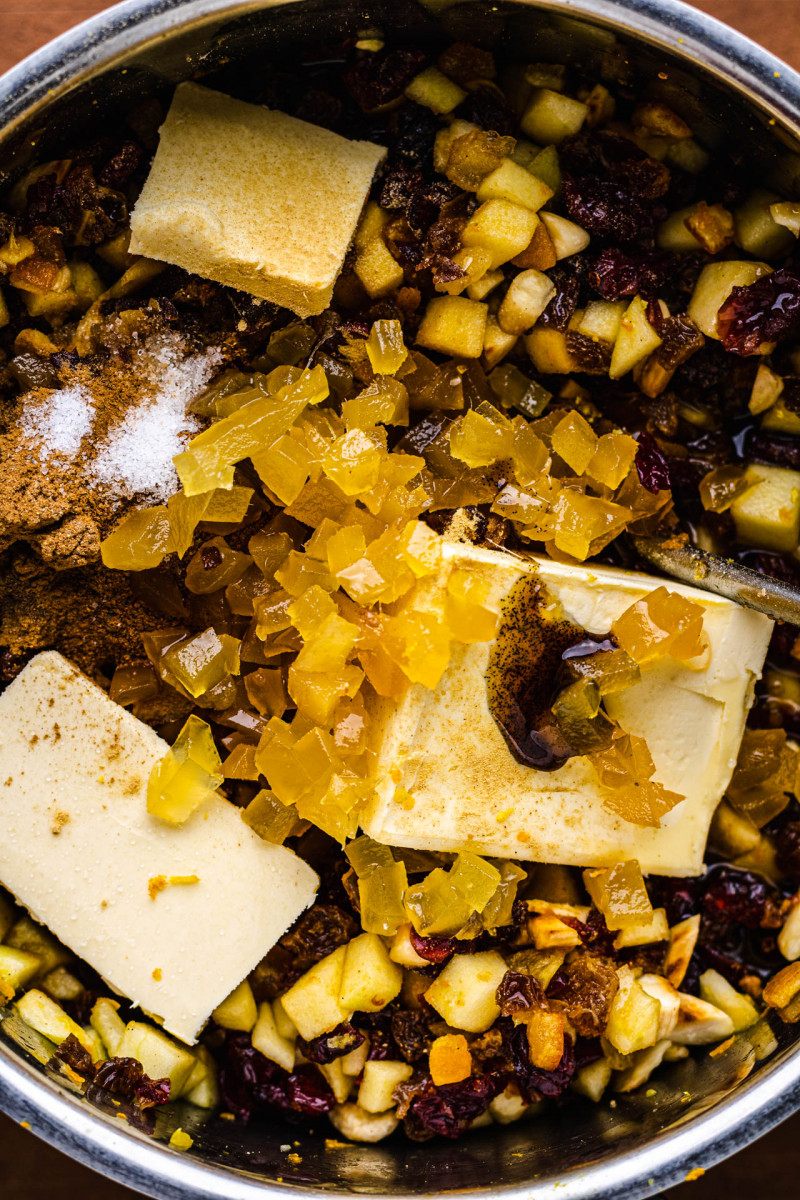
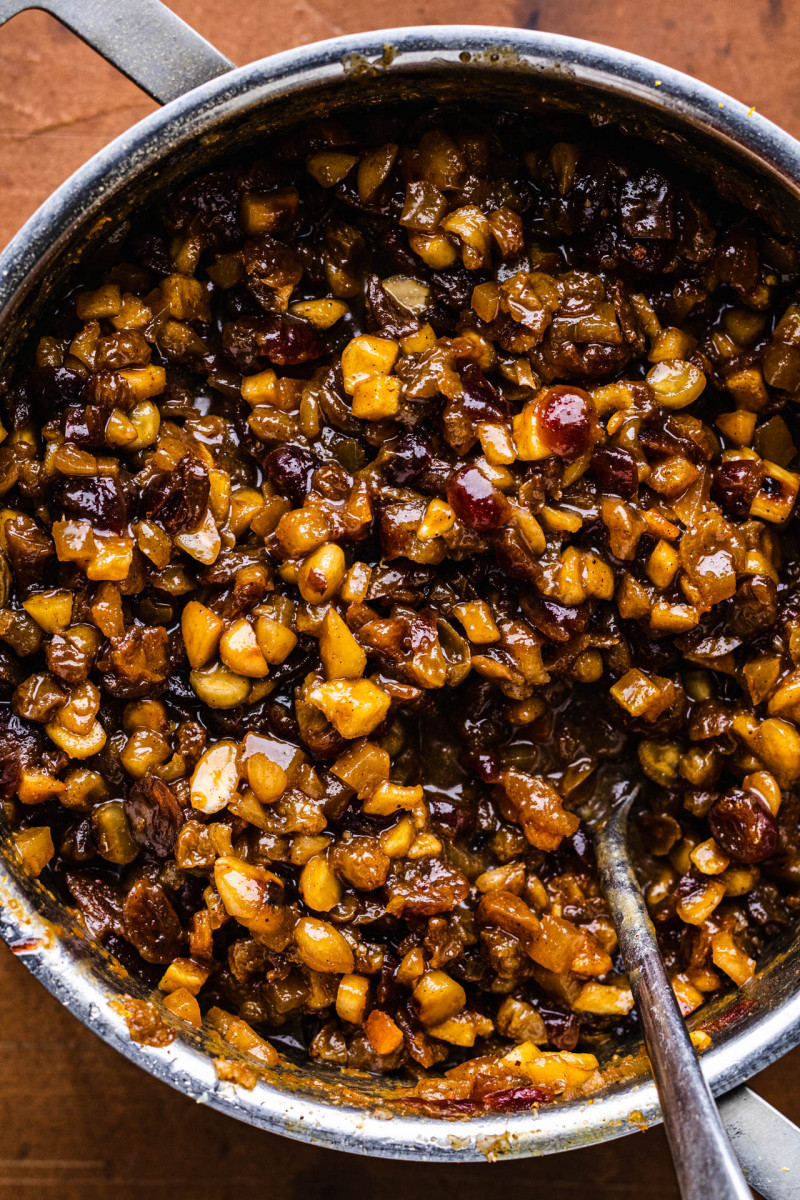
At least a day ahead (but a week ahead is great too) make the filling in a large pot. Combine all of the filling ingredients apart from the alcohol – dried fruit, nuts, diced apple, citrus peel, juice and zest, sugar, butter and spices – in the pot and allow it to bubble gently for about 10-15 minutes before adding alcohol and taking the pot off the heat and storing it overnight in a cool place for the flavours to mature and mingle.
2) MAKE SHORTBREAD PASTRY & BLIND BAKE
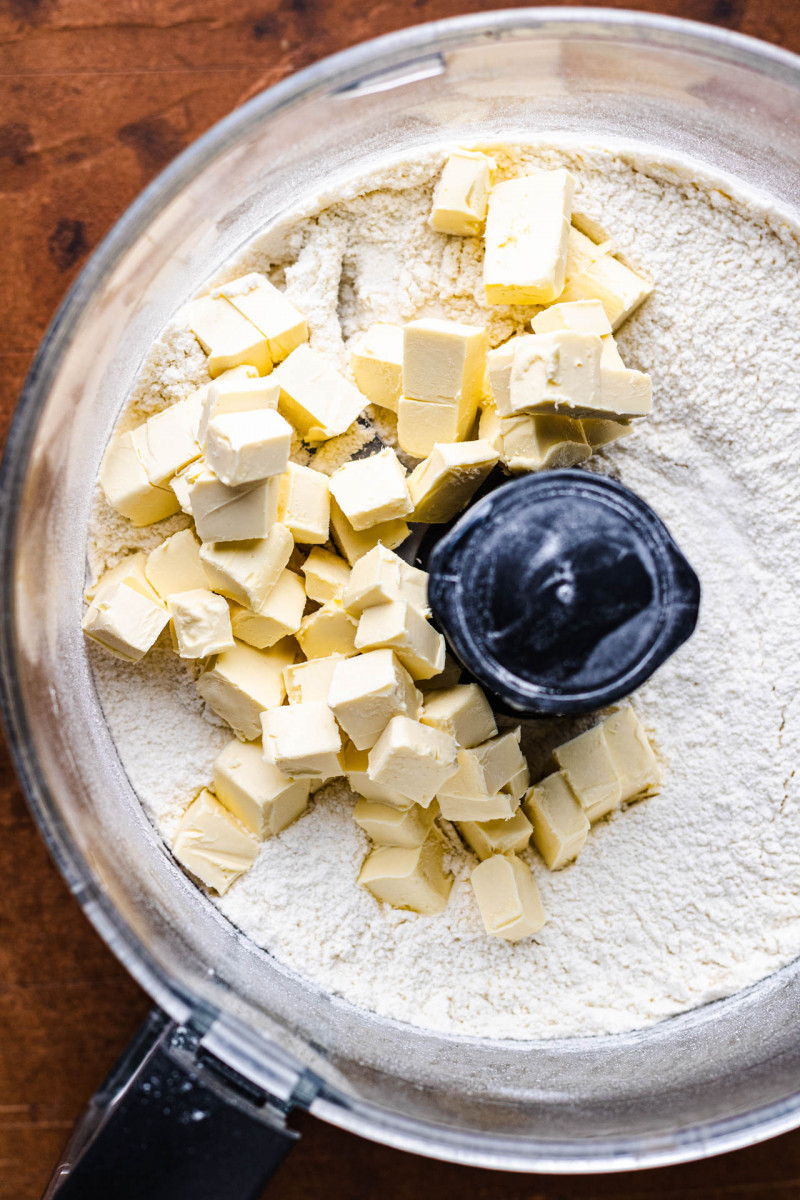
Make shortbread pastry in your food processor, it’s really easy and much less messy. Be sure you have a fridge cold mixture of water and vodka ready to use – use 100% water if you don’t have vodka, but vodka helps to get a nicer pastry and it inhibits gluten development, which is what makes pastry tough. Place all of the dry pastry ingredients in a food processor and pulse a few times to combine, then add small cubes of cold fat (in my case vegan butter, Naturli) and pulse a few times until the mixture resembles fine breadcrumbs.
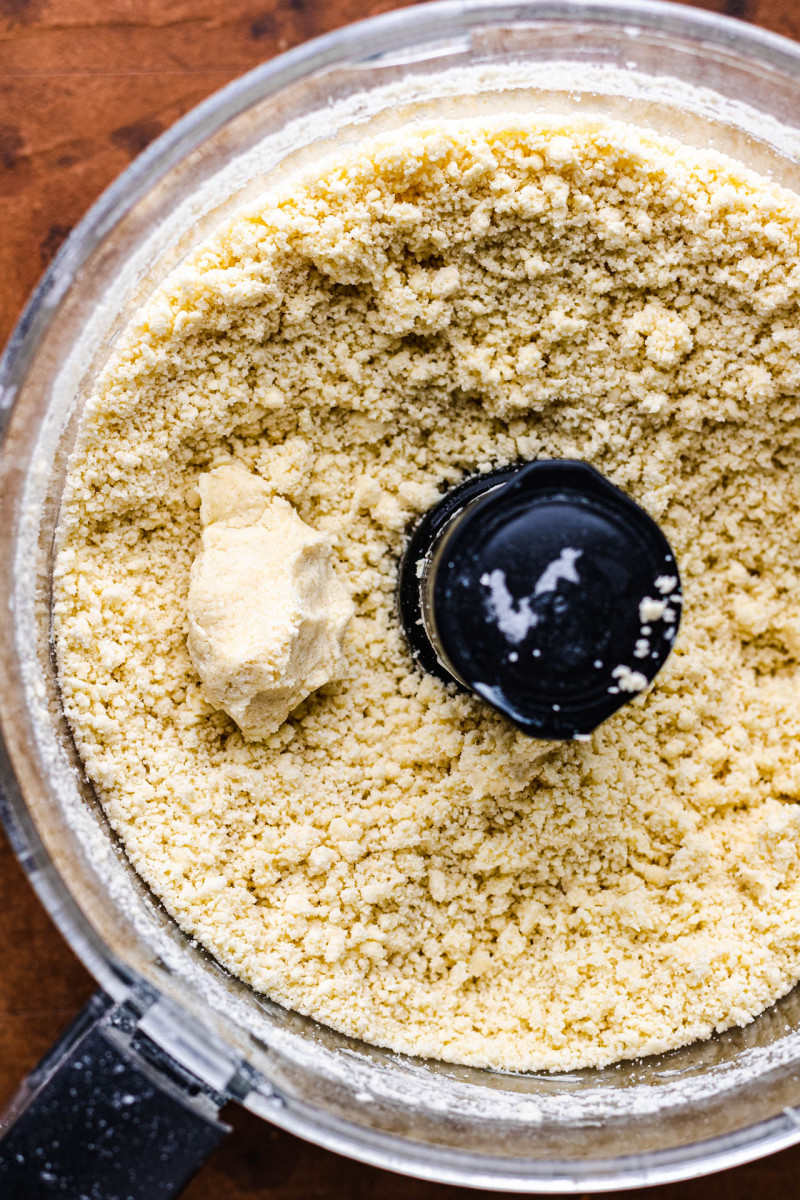
Next slowly add cold vodka-water mixture while pulsing the dough, stop when the dough is moistened enough that it clumps together in your hand but is not wet – see that lump in my photo, that’s what you want. Start checking sooner than you think, by the time the pastry loosed moistened, you’ve added too much. Empty the contents of the food processor onto the counter and bring the pastry together with your hands. Form it into a disc and refrigerate for at least 30-60 minutes – longer is absolutely fine too.
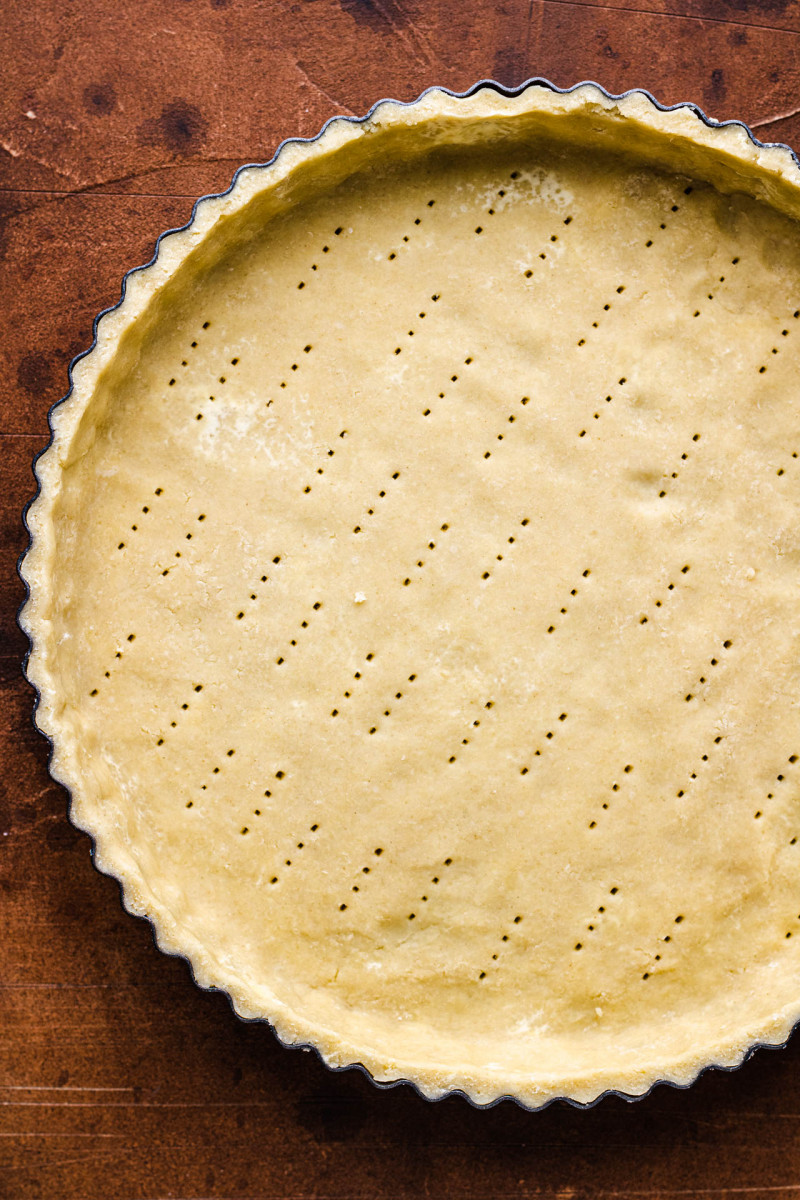
Once you’ve chilled your pastry, roll two thirds of it out on a lightly floured surface until you get a 3mm thick sheet larger than your tart case. Line the tart case with it – transfer it by rolling it onto a rolling pin and unrolling it over the tart case. Tuck it in well, repair any tears if they happen along the way, trim the excess and prick the bottom with a fork in several places. Line the tart case with a piece of baking paper, fill with baking beads (or rice or dry beans) and blind bake for 15 minutes, then remove the beads and the paper and bake for another 5 or so minutes – just until the bottom no longer looks raw but don’t let it brown too much.
3) FILL
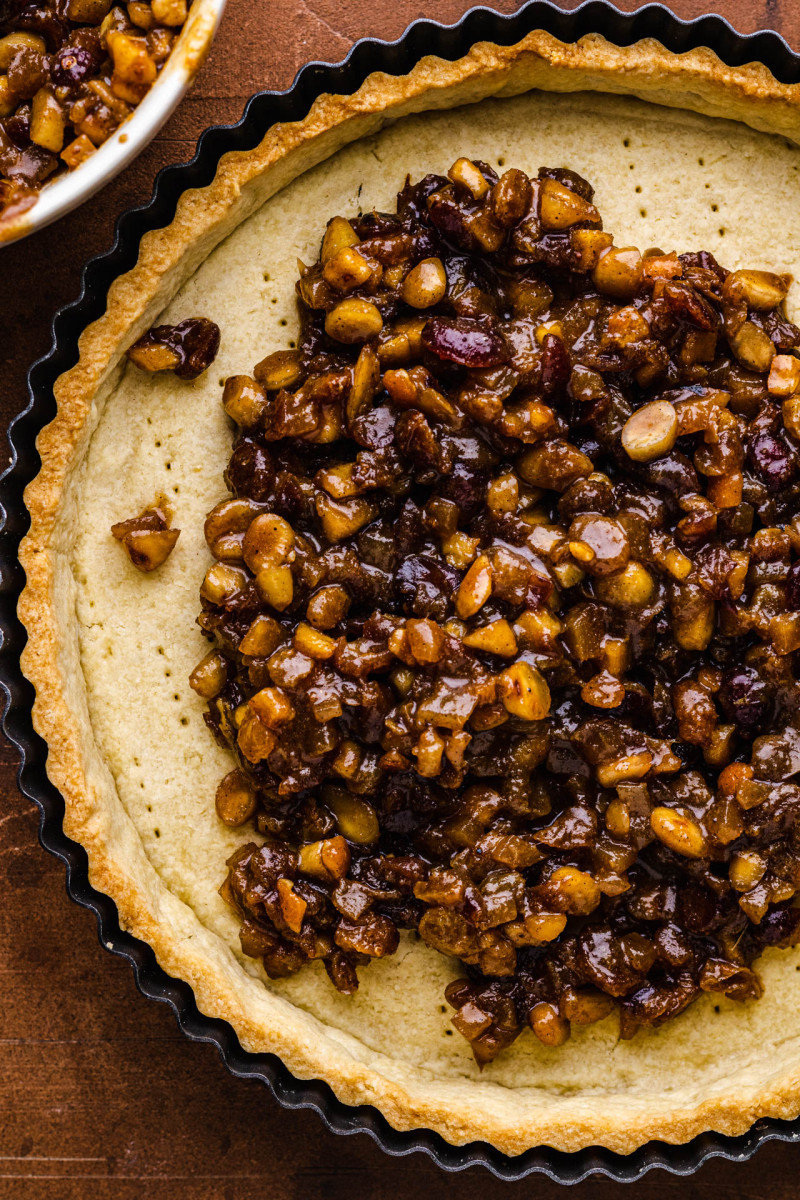
Roll out the remaining piece of dough and cut your favourite shapes out of it (I used stars) to put on top of the tart. Fill the tart with the mince filling (you may have some left over) and decorate with cut out shapes. You can cover the entire tart to form a sort of lattice top or you can only do a little bit like I did.
4) BAKE
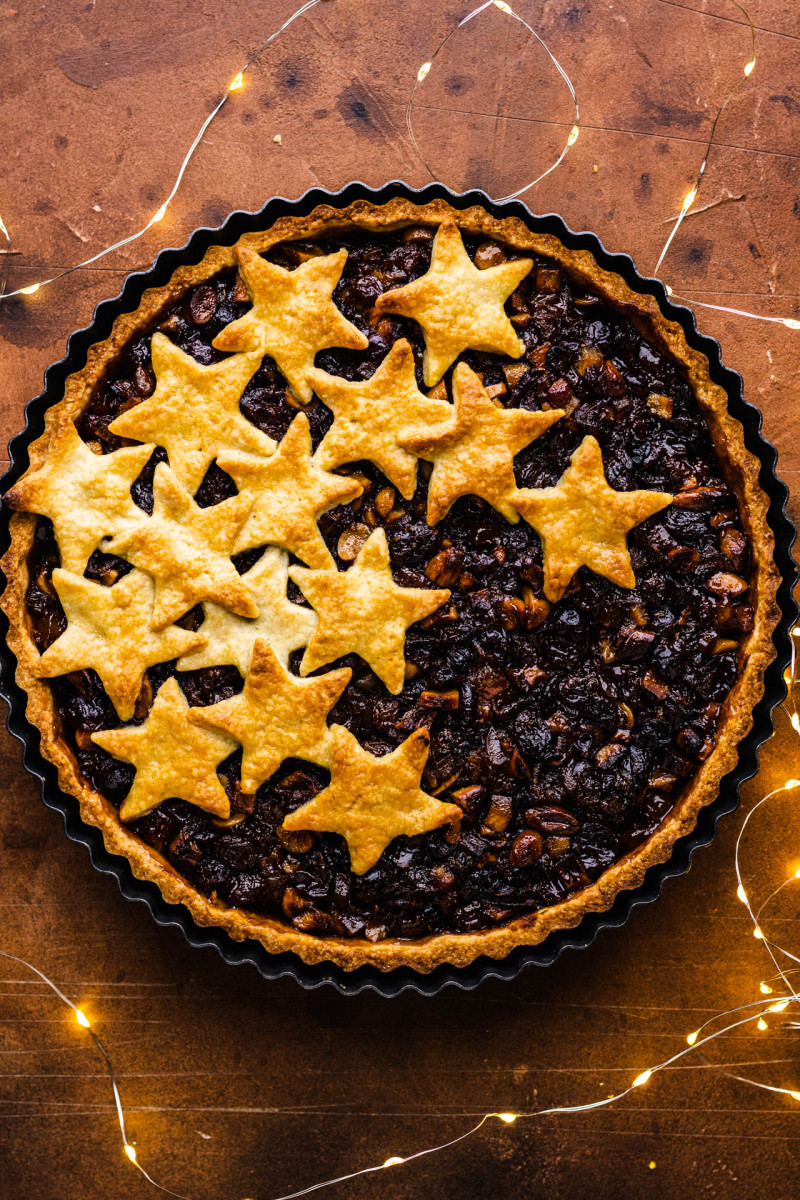
Brush the tops with a vegan egg wash and bake for about 30 minutes, until the filling is bubbling and the top is golden. It is a good idea to wrap the sides of the tart with strips of kitchen foil (like I did in this recipe) if they are browning too much.
MINCE PIE FILLING (make at least a dat ahead)
- 100 g / 1 cup slivered, flaked or chopped blanched almonds
- 70 g / 6 tbsp vegan butter refined coconut oil
- 70 g / 6 tbsp sugar* (I used a mixture of light and dark muscovado)
- 150 g / 1½ loosely packed cup sultanas, raisins or currants
- 150 g / 1½ loosely packed cup cranberries
- 100 g / ½ cup diced stem ginger (6 balls) or crystallised ginger
- 70 g / ½ cup chopped mixed peel
- 1 sour apple (I used Bramley), finely diced
- 1½ tsp cinnamon
- ½ tsp ground ginger
- ½ tsp ground cardamom
- ¼ tsp ground coriander
- ¼ tsp all spice
- 1/8 tsp ground cloves
- ½ whole nutmeg, finely grated or ½ tsp ground
- zest and juice 1 lemon
- zest of 1 orange and juice 2 oranges
- 2 tsp vanilla extract
- 60 ml / ¼ cup Amaretto, Brandy or Port*
PASTRY
- 310 g / 2½ cup plain flour*
- ½ tsp salt
- 60 g / heaped ¼ cup superfine or icing sugar
- 160 g / 5.6 oz vegan butter (almost 1.5 US sticks)
- 30 ml / 2 tbsp cold vodka (optional)
- ice-cold water, about 2.5 tbsp
- 800 g / 3 cups of mince filling, shop-bought or see above
- 1 tsp maple syrup
- 1 tsp neutral oil (like grapeseed)
- 1 tbsp plant milk
MINCE PIE FILLING (make at least a day ahead)
- OPTIONAL: Toast the almonds until golden in a dry frying pan until golden.
- Combine all of the filling ingredients except for the alcohol in a medium size pot and set it on low heat
- Bring the mixture to a gentle simmer and allow it to bubble gently for 10 minutes, stirring the whole time.
- Allow the mixture to cool down, stir the alcohol in well. Cover the pot with a lid and place in a cooler part of the house overnight or the fridge for the filling to mature and intensify in flavour.
PASTRY
- Mix 2 tbsp of vodka and 2.5 tbsp cold water and place in the freeze to chill for 10 minutes.
- Put flour (and xanthan gum if making GF pastry), salt and sugar in a large bowl of a food processor and pulse until combined.
- Dice fridge cold vegan butter or coconut oil into small cubes and add to the food processor. Cut fat into fry ingredients using the pulse function until the mixture resembles breadcrumbs.
- Trickle chilled vodka-water mixture into the food processor while pulsing. After 3.5 tablespoons added, start adding teaspoon after teaspoon and check if the mixture clumps when squeezed but does not feel wet. When it does, stop adding liquid. Start checking early as the mixture may look dry but when you grab it comes together nicely.
- Empty the food processor onto the work surface and bring the pastry together gently with your hand. Shape it into a flat disc – handle the dough as little as possible – wrap it in cling film and chill for 30-60 minutes.
- Preheat the oven to 180° C / 355° F (or 160° C / 320° F with a fan) and grab a 25 cm / 10″ tart case. MY case is non stick and has a removeable bottom but if yours tends to stick, prepare it as you normally would.
- Roll out 2/3 of the dough on a lightly floured surface until 3 mm thick and a bit bigger than your tart case. Keep the 1/3 in the fridge.
- Line the tart case with the rolled out pastry, tucking it in well around the edges. Cut the excess off with a sharp knife and prick the bottom with a fork.
- Crumple a piece of baking paper larger than your tin in your hands, then smooth it out and line the pastry with it, fill the paper with baking beads (or beans or rice) and bake for 15 minutes.
- After 15 minutes, remove the beads and the paper and bake for another 5 minutes – until the pastry is no longer raw but don’t let it brown.
- While you are blind baking your pastry case, take the rest of the dough out of the fridge, roll it out and cut stars or other shapes you prefer out of it.
ASSEMBLY
- Increase the oven temperature to 200° C / 390° F (or 180° C / 355° F with fan) and place a light metal baking tray in the oven.
- Fill the pastry case with the mince. It’s a good idea to protect the edges of the tart with strips of kitchen foil (like in this recipe) as otherwise they may brown too much.
- Make pastry wash by combining 1 tsp oil, 1 tsp maple syrup and 1 tbsp plant milk. Decorate the top of the tart with cut out shapes and brush them with the wash before returning the tart to the oven (place it on the metal tray that’s been pre-heating).
- Bake for about 30 minutes until the shapes are golden and the pie is hot and bubbling. Let it cool down to set. Enjoy as is or with a scoop of vanilla ice-cream.
*ALCOHOL: Amaretto isn’t traditional, but that’s what I like to use. Traditional recipes use Brandy or Sherry, you can also use Port or Marsala if you have either of these at home.
*GLUTEN-FREE: You can make the pastry gluten-free by using a tried and tested gluten-free flour mix and ½ tsp of xanthan gum (unless your flour already contains it) for every cup of gluten-free flour so in this case 1¼ tsp.